Did you know the infamous Seven “Adopt a Dot” initiative was born in Germany? The idea came from German technician, producer, inventor and businessman Thomas Hohenacker, who, during a visit to his girlfriend, he saw that one of the stickers placed on the TV panel was covering the Sat.1 DOG, as she had mistakenly assumed that the aforementioned sticker fulfilled a technical functionality.
In October 1985, Hohenacker founded and led Telcast International GmbH, which hitherto was only an independent producer and distributor of films and TV content, having produced quality content for major broadcasters like Discovery, Nat Geo, NHK, ABC US, the BBC, ZDF, RTL, Vox, ProSieben and TF1, among others. With that same experience with his girlfriend, he saw a new opportunity to launch a new idea and develop the company’s revenue streams.
Eventually, Hohenacker came up with the idea of a sticker that could be used to capture audience behaviour and also help to improve ratings measurement, which could had helped to be a serious alternative for complex and limited ratings measurement systems. In November 1995, he patented the device in the European Patent Office, after two years of development and implementation. According to DWDL.de, it was composed like this:
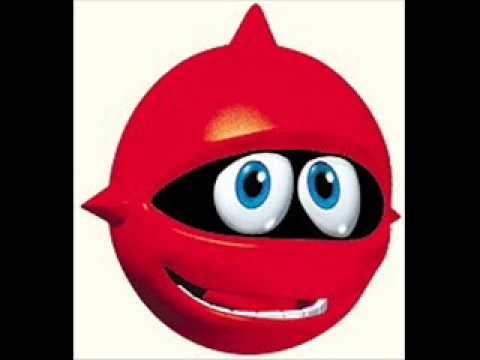
“a small cardboard disc, about five marks in size, in which such a light-sensitive film was incorporated. It was divided into six sectors, which could be illuminated differently through several holes in the cardboard layer. Like a sticker, it had to be attached to a predefined point on the running frosted glass, as the inventor had once observed with his girlfriend. In addition, a special signal had to be transmitted via the television image so that the lighting could run correctly. It had the shape of a red dot with a face on it.”
The mix of the cellophane light film, plus red and white inside the cardboard, helped to create patterns with different levels of radiance, and placed into a special rotating disc, which recorded the exposures through a special high-resolution camera, and understand if the programme in question had been seen from start or finish. Eventually, Hohenacker saw this as a gold mine opportunity to create new revenue streams for his company, and in 1996, he created a new subsidiary, “tv miles international”, legally registered in the Netherlands and based in Amsterdam. He decided to sell these dots as an “integrated marketing solution to television broadcasters” in which they could increased their awareness and audience figures. Its first client came from Hungary, which adopted the system in 1998. Along with Australia and New Zealand, it was reportedly also used in Portugal.
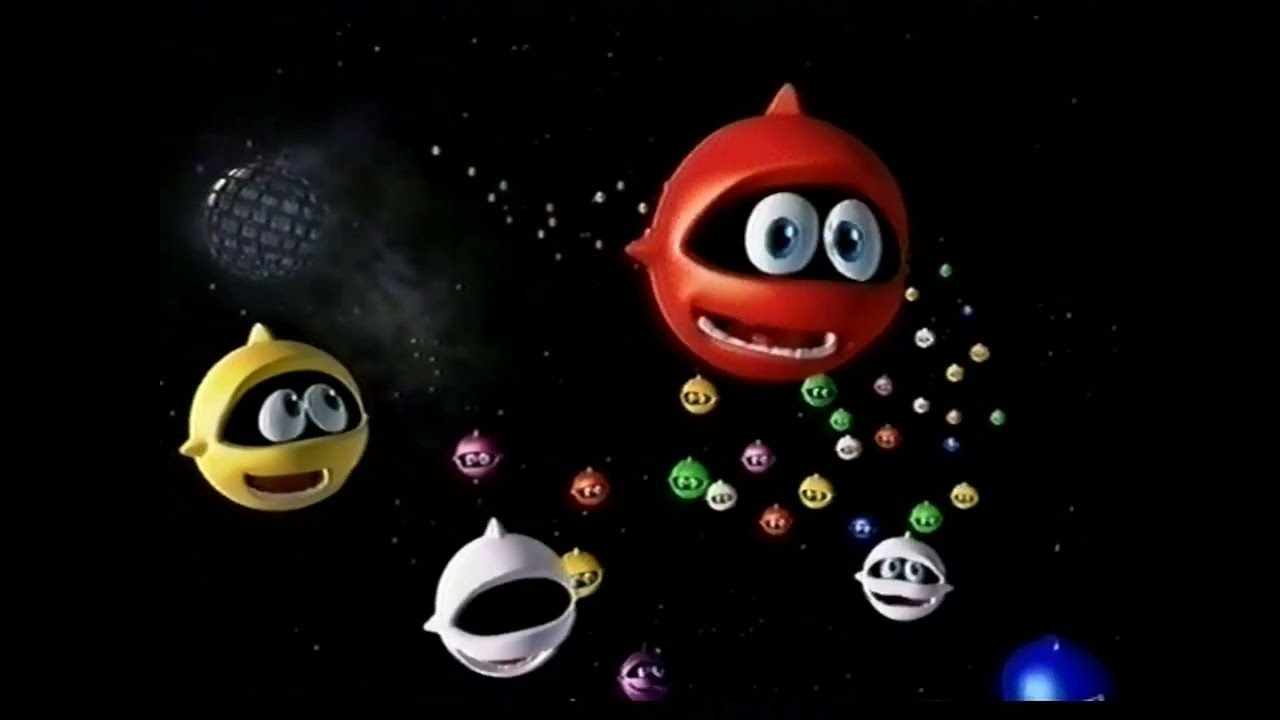
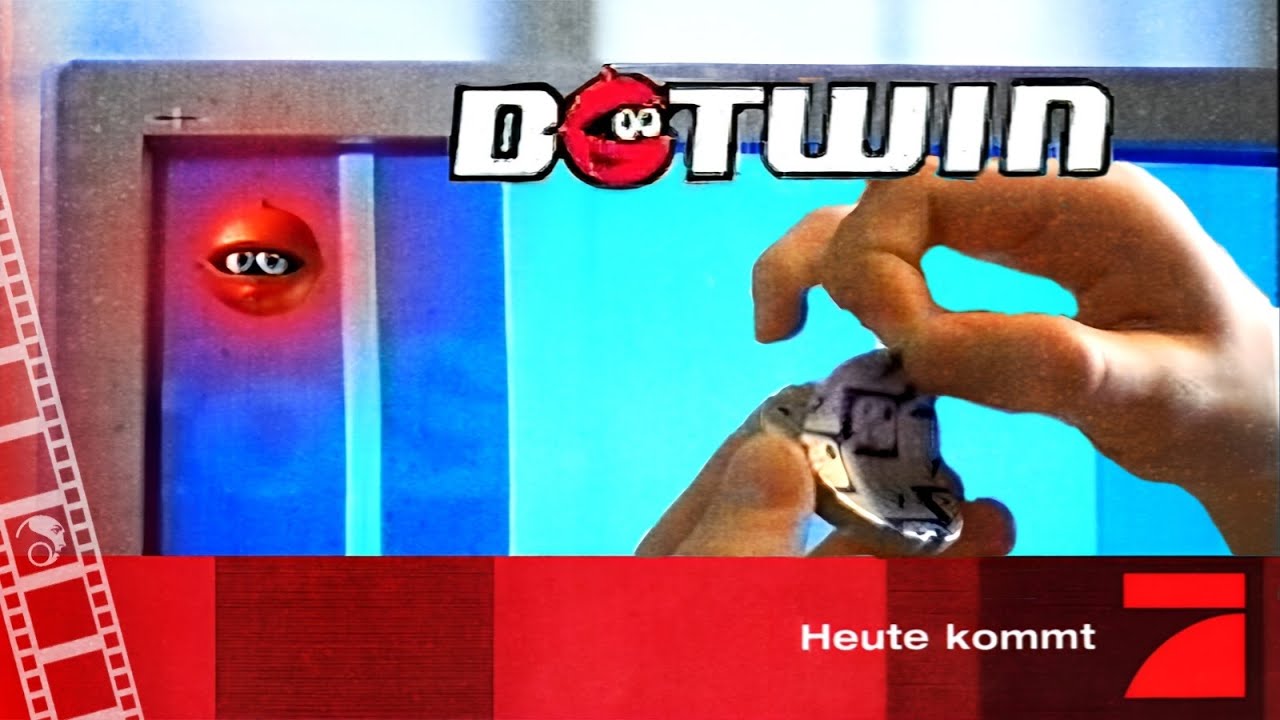
The Hohenacker experiment was launched in his home nation in April 2001. He sold the experiment to ProSieben, which named its campaign “DOTWIN”; that ran during six weeks between April 25 and June 7, and included its accompaining competition, which ProSieben advertised as targeted “for the whole family”. Much like on Seven, the dots were given an alien appearance on promos and trailers, and even ads with the same backstory, showing these dots reportedly coming from a distant planet, where eternal darkness reigned, and in search of light, they reached Earth by inviting viewers to adopt them and sticking these on their TVs.
The ads featured a techno remix, by German-Romanian DJ Ovidiu Sorin Stan, under his alias of Blue Nature, of “Now We Are Free”, Hans Zimmer’s theme for the Gladiator movie. During these broadcasts, a red dot was superimposed on the top left corner of the screen (opposite ProSieben’s DOG in the top right corner) during the first five minutes of the selected broadcast to indicate where people should put the dots on their screen.
Hohenacker’s company and ProSieben’s parent company, the freshly created ProSiebenSat.1 Media (wholly owned by the Kirch Group, which was in process of reorganising their assets at the time and integrating them into P7S1 due to its financial issues), committed to 50 million devices, which were distributed on McDonald’s restaurants, Shell gas stations, Telekom stores and official third-party distributors, and Deutsche Bank’s consumer and direct banking branches (then known as Deutsche Bank 24).
The envelopes where the devices were stored, to be given by post to the network’s facilities in the Munich suburb of Unterföhring as part of a daily prize draw, were also distributed there, and also sold at various conventional shops and stores. The prize draws took place every weeknight on the network’s main tabloid entertainment and lifestyle magazine taff, where cars, trips and cash were given. A grand finale draw was held on June 15 during the same programme.
Bild newspaper was the main sponsor of the campaign, promoting its involvement by showing the traditional Page 3 girl wearing a DOTWIN device on her belly button, and also announcing inside its issues the two daily broadcasts which could be used to “activate” the devices. These broadcasts varied, one day it could be a full feature film, sometimes a single episode of Buffy the Vampire Slayer, or even an edition of “Arabella”, ProSieben’s main tabloid talk show, hosted by Austrian personality Arabella Kiesbauer.
The DOTWIN campaign was accompained by a large marketing blitz, which ProSieben emphasised a way to strengthen public loyalty. According to ProSieben spokeswoman at the time, Diana Schardt, to the Berlin local paper Berliner Morgenpost, the dot “aliens” served to build an emotional connection with the network, with the “haptic” mascots and image story of the flying dots serving as the core of the campaign. That spring, DOTWIN was nearly everywhere: even then-VfB Stuttgart coach Felix Magath posed with one of the “dots”, skinned with the Bild logo, and two of the envelopes used to send the “dots” to Munich.
ProSieben even released, together with Warner Music, a double compilation CD, “DOTWIN Party-Hits”, an uptempo pop, hip hop, Partyschlager, Eurodance and techno compilation of hits featuring artists like Bosson, No Angels, Rednex, Scooter or Gigi D’Agostino, including a bespoke promotional song named after the campaign’s slogan, “Bring micht zum Licht!” (“Bring me to life!”), produced specifically for the campaign by Russian DJs Eduard Gubin “Cosmonaut” and Alexandr Chudopalov “DJ Magic Finger” (credited as Dotwins United) and which was also included on the double CD.
The promotional single was also released as a single CD, which included an extended mix and a remixed version by German hard trance DJs Oliver Bensmann “Revil O” and Nils Ruzicka; the Euro techno-genre song featured a retelling of the image story narrative with the main DOTWIN figure uttering the slogan constantly; they even released interactive content on the network’s website, including a version of Pacman and a downloadable “dot” which could invade and jump around the screen.
However, the DOTWIN campaign was marred by three things: from the start, two legal requirements in German broadcasting limited the action, first, the legal separation of programming and advertising (shown clearly on the Werbung break bumpers), which led to activations to pause during the break, allowing viewers to switch channels safely, and second, a now-repealed regulation (dropped in 2010) which stipulated that a competition could not be linked to a product purchase or service use; ProSieben complied with this by offering an alternative method to take on the daily prize draw, where in the end of a DOTWIN broadcast, an easier way to take part was given, in which a small number of dots were displayed during the post-show advice; these dots had to be counted and sent through mail, and the chances were as exactly the same as on the normal way.
The third thing which marred the campaign was a suspicious and eventually malicious email sent in chain to a large number of addresses by an anonymous issuer in May 2001, in which it stated these devices were suspected of secretly spying in viewers; the email denounced that a possible chip installed inside the device, supposed to be a CC128-A4 controller from Siemens’ Infineon, was allegedly a replica of an American microchip used for industrial espionage, an i440-128.
The email featured even conspiracy theories involving “shady corporations and corrupt politicians” who would fool the population (the exposure zones on the device were “collector surfaces” where the data could be stored), secret micro-chips (enough 128kb storage to log private costumer data and even identify how many people were sitting on the TV), illegal profiling (McDonald’s using the data for marketing purposes and a “criminal” GEZ (the company handling licensing for ARD, ZDF and Deutschlandradio, to which data from the DOTWIN could be sent to them, and in case of not paying the license, could be used to detect and investigate unlicensed use of receivers).
The newspapers reported on the plot, and the situation led to newspapers like taz, Die Zeit or Die Tagesspiegel, and even the Technical University of Berlin, to disassemble a DOTWIN device, which refuted all of the conspiracy theories described on the email, with the device itself only having the cardboard and the cellophane light film, with no trace of microchip. ProSieben also responded to the issue, assuring these allegations were untrue and that the company would never hand over these sensible data to third parties, not even to GEZ “for its own interest”, according to the network’s marketing chief Hans Fink.
The scandal slightly boosted the DOTWIN campaign: at the end of the campaign, 7 million devices were activated, around 200k daily, of which 80% were correctly activated, resulting on a participation rate of 14 percent, the highest rate for a ProSieben competition, and a total of 29 cars (one per day, provided by Volkswagen), 94 trips (provided by last minute travel agency L’TUR, of which three trips for 2 persons were raffled daily, and ten more, also each for 2 persons, raffled in the final big draw), 290 GSM mobile phones with its corresponding prepaid cards (provided by Telekom through its T-D1 XtraPac prepaid mobile package, of which 10 were given daily) and almost 2 million Deutsche Marks in cash (provided by Deutsche Bank investment subsidiary Maxblue, up to 100k DM was given to a lucky winner in the daily draws, and a grand 500k DM given in the final draw) were drawn in to viewers.
Audience figures increased on DOTWIN-participating shows, but other shows remained flat; for example, an episode of pseudoscientific programme “Galileo” had its ratings increased to 30 percent. An accompaining survey, published before the end of the competition phase, proved the emotional value of the campaign, with two thirds of respondents in the demo knew the DOTWIN, seeing it as “something new”, “original”, and “suitable for ProSieben”, and around half had gotten at least one of these devices.
It was such a success, that sister network Sat.1 relaunched the campaign as part of its 2002 World Cup coverage, with distribution of the dots starting on May 24, with the accompaining competition beginning on May 31 and ending on June 26. Unlike the ProSieben version, the stickers were primarily tied-in with the World Cup coverage and with the evening magazine “ran - WM-Fieber”, with “dot” being placed during that programme and through the tournament; the prize draws took place daily, on weekdays during the Sat.1-Frühstücksfernsehen and on weekends as part of the World Cup special. T-Mobile served as main sponsor for this edition, with Mercedes-Benz providing a daily winning car from the A-Class model, and Shell, DEA and TV Spielfilm magazine serving as distributor partners. A €250k jackpot was also given on the last prize draw, in the evening of June 30.
The designs, which retained the alien design, were recoloured in the design of the Sat.1 ball logo; the overall narrative involving the outer space image story was replaced with references to football, down to the slogan “Rechts oben ins Eck!” ("right in the upper corner”), which referenced the position that the DOTWIN should be placed, in the top right corner, next to Sat.1’s DOG (also located in that position). In total, around 30 million “dots” were set to be distributed Germany-wide; the non-DOTWIN promotion was also vaild. After the World Cup, the DOTWIN aliens and the overall campaign were finally dropped.

Hohenacker became a millionaire, achieving various million sales through these “dot” devices, despite the various degrees of success in the countries it was implemented, though for Hohenacker, he wasn’t to stop there: in 2002, through Telcast International, he created earthTV, the global network of automated cameras which provide images from around the world around the clock; Hohenacker developed the company’s technology and hardware, which allowed the cameras to be fully-remote controlled from Munich, featuring motion control heads and zoom lenses which are properly designed to work in low-light conditions. Also, Telcast later patented a production technology which allowed broadcasters to convert TV pictures to 3D.
He led earthTV until 2011, where he left media to focus on a new invention: developing a new intelligent sensor system to develop smart on-street and outdoor parking areas, and reduce search traffic, CO2 and driver stress. The result was Cleverciti Systems, a company which developed the system and its software, and had offices in Munich, Starnberg, Neukirch, Chicago and Atlanta. Hohenacker was CEO of the company until 2022, becoming a leadership coach at the Munich-based RIXCOM Academy and on the German business incubator Start2; he remained a board member until 2025, when his company was sold to Spanish company ParkHelp, which integrated the technology and offices into its platform.
earthTV has since grown as a major player in remote-controlled cameras, with its client base covering nearly every country worldwide, and offering broadcasters access to live, real-time beauty shots from around the world in an easy way, and since 2008 has offered direct access to its content through its website and its branded YouTube channel. In 2012, Telcast sold the company to a consortium led by German independent film producers Nikolaus and Claudius Lohmann, through the Berlin-based Lohmann Technology GmbH; the brothers have been sole owners of the company since 2021.
As for the dots, these would no longer be seen in the foreseeable future.
Some of the source material for further reading (in German):