Did have Townsville and Cairns into Bowral. What a day for Dxing.
4 Likes
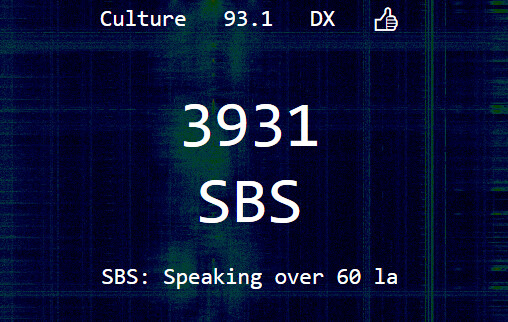
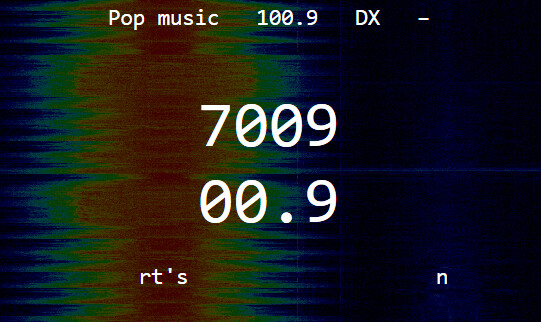
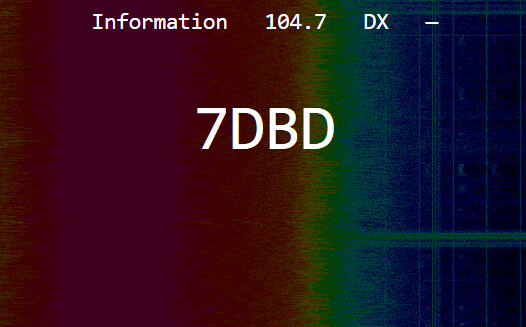

Received an unusual frequency via Mildura webserver on 97.4MHz. Sounded perhaps like a TAB/SEN station, 2 gents speaking - didn’t last long. Mmm… Aussie accented.
This was between Cairns & Innisfail’s 98.3 Kool reception. No other areas/frequencies in at the time AFAIK.
Just a bit more research; I can see that there’s a 4TAB station listed for Innisfail on 97.3 & the TX site is located between Cairns & 98.3 Kool FM’s TX site.
I am going to call this 97.4MHz off-nominal frequency catch, dx reception of 4TAB 97.3 Innisfail which is listed with 25W. Has anyone else caught this? @dxnerd ?
3 Likes
Because I receive Mt Dandenong stations so strong, and some of these DX stations are only 200kHz apart, it makes RDS decoding difficult.
The beauty of a Yagi, it’s essential in the city to reduce local signals.
4 Likes
What’s more directional for a three-element yagi - vertical or horizontal mounting/polarity? I’ll probably have to mount all but one in horizontal anyway, so that all 6 antennas can fit on the same pole (and with enough spacing between them).
Too bad it’s hard to find more directional FM yagis (i.e. more elements).
2 Likes
I don’t know that more elements necessarily mean more directional, just higher gain?
Vertical and horizontal i imagine will be the same in that respect too.
1 Like
Never really experimented with vertical Yagi polarisation, as I have the dipole for vertical signals. However I believe directivity is more related to the design of the antenna rather that the polarisation.
My main reasons for choosing horizontal are:
- The dipole is vertical, so there’s no need for two vertical antennas
- Better attenuates local static, although directionality might also play a part in that, vs omnidirectional.
- It greatly reduces the signal strength of local vertical-only transmissions
- I believe horizontal is more effective with SprE, but again, I haven’t conducted my own personal experiments.
Increasing the number of directors means both the gain increases, and the beamwidth decreases.
4 Likes
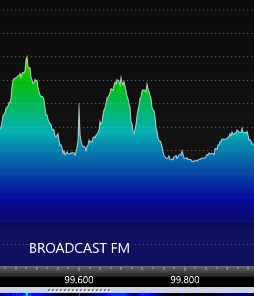
Motivated by what has always been the case with AO Radio, it’s quite severe. Their antenna being 10m ASL doesn’t help, but then again, it’s only to cover the CBD.
3 Likes
Where have they stuck their TX antenna? ACMA register didn’t provide specific coordinates?
BTW your Spectrum plug-in came in really handy today. Was great fun to play with. I would never have found the 4TAB Innisfail outlet on the Mildura webserver without it. So again thank you for all your hard work creating it. It has added so much to my enjoyment & success of webserver fm dxing with it.
3 Likes
Only aware of what the ACMA reports, which is the antenna height is 10m above ground, transmitting from within Rod Laver Aena itself, which is basically at sea level. Meaning, there’s no studio-to-transmitter link.
2 Likes
I was lucky enough to receive it at the time from my location (at very weak levels), a day before the commencement of the station’s broadcast license, I suppose via tropo.
I tried receiving it again a few days later into the broadcaster’s lifespan for January 2025 and no AO Radio at my location.
That’s the best usage of PI codes - no boringly using 5939 or something, great work.
I do like the US system where their RDS always translates to callsigns, but I suppose it’s good we didn’t get some Australia specific proprietary thing.
1 Like
Ah ok. I’m not sure. I had read that the greater the number of elements, the narrower the beamwidth.

Oh ok. I had seen some polar diagrams with difference between H and V, but maybe that only applies to transmit.

Horizontal sounds like a good option then. Only thing is that some stations are V polarity, e.g. Gosford community stations, but I’ll have the north-facing antenna in V anyway.
2 Likes
@tvcl your thoughts & findings are correct, others are slightly leading you astray.
Yes more elements on a Yagi antenna will not only increase it’s gain, but will narrow the beam-width, making it more directional, making them especially good for reducing unwanted signals or interference from the side (or not directly in front of them).
As for directional strengths, Horizontal or Vertical mounting makes no real difference as to the particular antenna’s characteristics unless it’s designed to be only mounted one way, either Vertical or Horizontal & no the antenna specs you see in a polar diagram aren’t only for transmit, they are the same for receive too.
Measurements in an antenna polar diagram are indicating the E plane looking at the elements front-on along the elements & the H plane looking at the side or ends of the elements, the E plane is the Electrical plane (which carries all the signals strength & signal data), the H plane is the magnetic plane of the signal which is of no use to a receiver, it only carries magnetic information to create/generate the next Electrical plane in the signal propagation as the wave moves out from the source & changes from positive to negative.
The H plane & E plane will always be 90 degrees from each other & the signal/radio wave you finally receive at your radio/TV isn’t the same one that left the transmit antenna, it’s been regenerated many millions of times between the TX & RX points, electrical to magnetic to electrical to magnetic wave & repeat.
As far as gain or beam width of an antenna, forget many elements & just think of a 1 element dipole, if it’s horizontally mounted it’ll be “generally speaking” omnidirectional in the horizontal plane, but limited in it’s gain & beam width & directivity in the vertical plane as you’ve only got a very narrow area to transmit or receive a signal like looking into the end of a drinking straw.
If you’re looking at an antenna polar diagram, the E plane will be the horizontal measurements in a horizontally mounted antenna, if the antenna is mounted vertically, the E plane measurements will be in the vertical plane.
The polar diagrams info sheet you just posted, I don’t know what they are supposed to mean & what way the antenna is mounted, the antenna gain & beam width shouldn’t change with the way the antenna is mounted, except to say in the picture in that info sheet, the mast it’s mounted to will have a small affect on the antenna, as it will act like another reflector with the antenna not being mounted standing off the also vertical mast, that’s the only reasoning I can come to as to why it has differing Vertical & Horizontal measurements in the polar diagrams & what do they mean are they just a E plane measurement for Vertical & Horizontal mounting or what exactly are they a measurement for?
4 Likes
Strong tropo in melbourne this morning.
MIXX fm with RDS on 106.3, 93.7 and 88.9
(MIXX 88.9 was overtaking a local community station)
ABC northern Tasmania on 104.1 and 103.3
Gippsland FMs at 40dBuv and TRFM with RDS.
Sea FM on 102.9
Ballarat FMs strong with RDS
3 Likes
MVFM96.9 was there this morning too with RDS.
Later a mix of 3SUN & 3SWR
Reception of 89.5 was interesting. Earlier just South Coast FM,
then later I was hearing at equal signal strength level three Victorian FM stations simultaneously, namely; 3ABCRR Apollo Bay, South Coast FM & 3PNN Bendigo.
I think this might have been the first time I have ever encountered hearing more
than two FM BCB stations at the same time on the same FM channel. 
2 Likes
I always found Apollo Bay a rare catch in Melbourne when I was down there, so well done nabbing that.
3 Likes
Hopefully there’s some tropo DX on Monday as I’ll be heading down to Hotham via Cape Conran/Marlo. The forecast for Mallacoota is 28C so it’s looking promising. I haven’t nabbed 7AD FM, 7BU FM or 7SD FM yet.
4 Likes
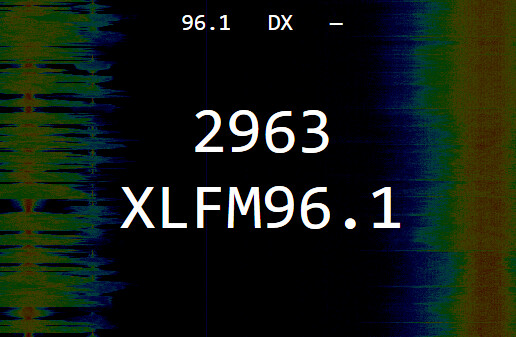
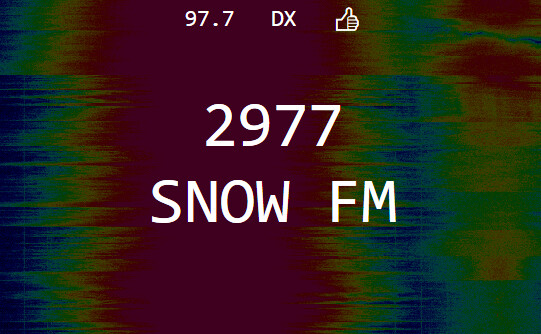
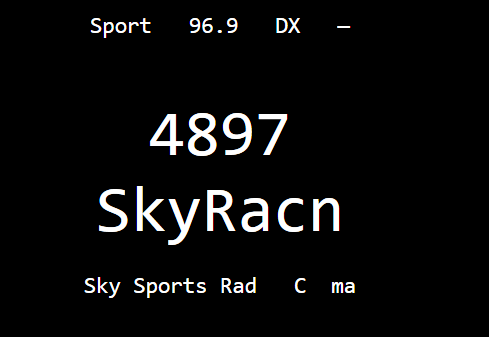
Wow - yesterday was exhausting. I’ve started to check recordings and find I have to check many frequencies for multiple signals in a short period of time. E.g. discovered Sky racing Cooma on 96.9 (that is usually RN from north and south). Based on that tracked down Snow FM on 97.7 over JJJ Gold Coast - the RDS code kept flipping between the two. Then confirmed 2XL on 96.1 over the top of Zinc and JJJ Lismore. All had RDS decode for part of the time.
6 Likes