International News

This will end the relay of American primetime news bulletins on weekday mornings on TVB Pearl in Hong Kong after more than two decades, which began with ABC World News Tonight.

(Trivia: NBC was one of the original investors in TVB, which won the FTA licence in January 1966. NBC sold its share years later)

2 Likes

Hungarian PM PĂ©ter Magyar’s Tisza Party has finally submitted his proposal for the new Hungarian Media Law, and here’s what to know about this:

  • The MTVA and the Duna Media Service will cease to exist, as the new regime says the OrbĂĄn-era state broadcast had a “complicated and opaque structure”. A new company for the TV and radio outlets will be formed, Magyar RĂĄdiĂł ĂĄ TelevĂ­ziĂł Nonprofit Zrt. (lit. Hungarian Radio and Television Nonprofit Corp.), and press agency Magyar TĂĄvirati Iroda will be again a standalone company (legally Magyar TĂĄvirati Iroda Nonprofit Zrt., lit. Hungarian Telegraph Agency Nonprofit Corp.). This legally separates the news agency and broadcasting tasks to allow “the operation of public media transparent, verifiable and open to social oversight”, according to Culture and Social Welfare Minister ZoltĂĄn Tarr.
  • With the reorganisation, all members and senior officials of the MTVA, Duna Media Service and the Hungarian Media Council (which was controlled by OrbĂĄn officials during his government) would be fired at the passing of the new law; the Media Council would return to independent oversight: it would now consist of five members, of which four would be elected by Parliament by simultaneous list voting (two from the ruling party and two from the opposition), and one, the President, would be an independent personality selected by a public tender. Membership has been reduced from 9 to 4 years (for parliamentary-nominated members, and 5 years for the President.
  • A new Independent Public Media Board will be formed as part of the new Law, tasked with protecting the public media’s editorial independence and oversee management, operations and contracts. It will be a paritary and professional body made of 9 members, of which six would be elected by National Assembly MPs, of which three will come from the ruling party, in this case, Tisza, and the other three from the opposition; any civilian officiating in any party in the 5 years before his nomination, had been candidate or delegate in the state or local levels, or engaged in party political activities can’t be nominated in any form, and will be elected by individual ballot. The other three will be nominated by employees and members of the media sector, including private broadcasters, trade unions and NGOs, and civilians. The parliamentary nominations will serve for four years in the Board, whilst civilians will serve for five years.
  • Civilian nominations for the Board would be subject to a public hearing, based around strict professional selection critieria, by a new Public Service Council, made by 18 members from the Hungarian Academy of Sciences, the Hungarian Olympic Committee, Hungarian Rectors’ Conference, the Hungarian Chamber of Commerce, designated official churches, the Hungarian Academy of Arts and organisations from the sector, local government associations, ethnic minority governments and overseas cultural organisations, human and child’s rights organisations and environmental rights and protection organisations, which would then vote the suggestions by simple majority and then the three will be nominated to the council.
  • The Independent Public Media Board would also analyse the annual management and budget plans for the new organisations, but contracts worth more than HUF 300 million and orders higher than HUF 100 million would be subject to analysis. Furthermore, they will commission an independent annual report to analyse the contents broadcast by the public broadcasters and MTI’s work as a news agency. Their salaries are capped to a salary amounting to 65% of what PM Magyar wins, whilst its members are capped to a honorarium-based salary 40% of Magyar’s salary; they can reimburse up to half of that honorarium.
  • The new Independent Public Media Board will be also tasked to nominate the CEOs for both MRTV and MTI through an open tender made in association with the Public Service Council. The application deadline will be 30 days after the publishing of the tender rules, which will be published on the Board’s website, on that of the Media Council and on at least three online news websites which must be “independent” and have “outstanding traffic”. The applicants and results will be also published on these website.
  • The new Public Service Council will also lead the creation of a new Public Service Charter for the new organisations, in which guidelines for the basic operation of these would be provided and set a standard within the framework of this new Media law. The Council, whose President will be selected between the members, will monitor the enforcement of the principles, and “ensure social supervision over the public service media provider and the media content provider”, whilst also making these organisations follow guidelines which can be “a verifiable and accountable requirement”.
  • Financing for public media is also changing: budget will now be determined on three-year periods instead of annual periods. Furthermore, responsibilities for distributing funds and resources to the broadcasters will now be handled directly by the state, which would determine their contribution on the number of households during the period and based on the rate of inflation. Additionally, a new Press Fund would be established, in order to “support independent media content providers, social media services, the production of public service programs and press products operating according to the standards of ethical journalism, as well as to carry out other related tasks”. This would be financed with the revenues of broadcasting, transmission and licensing fees, fines and compensations from complaints, support from private and cable broadcasters, state interest income, and voluntary donations and payments.

The proposals for the Media Law were submitted on Friday evening by three Tisza MPs, IstvĂĄn Hantosi, MĂĄrton MellĂ©thei-Barna and KrisztiĂĄn KulcsĂĄr, as an independent representative motion. Tarr says this proposal wants to make “public media returned to the public, to the Hungarian people”. It is by far the first step onto redefining Hungary’s political and economic identity.

The proposals were summarised by Hungarian independent news outlet Telex, from which my summary was sourced from, and, of course, translated into English for you.


TV2’s new newscasts would have a very generic branding: TV2 Híradó (lit. TV2 News Broadcast) and TV2 Hírek (lit. TV2 News Report) were registered at the end of May by TV2’s legal representatives, and was immediately covered by weekly opposition newsmagazine Heti Világgazdaság (hvg, lit. Weekly Financial World), which maintains a free online website.

3 Likes

Some news from the Philippines


Well, GMA News dropped the ‘Integrated’ in the name back in March, initially with minimal on-screen changes, like the generic news open:

Now the newcasts retire the unified branding, with Unang Balita (the morning news segment) using the same arch symbol as the main show, Unang Hirit (in use since December before the newsroom rebrand):

And Balitanghali (the noon news) on GTV takes on a gradient oranage backdrop, versus the standard blues, reds and white:

24 Oras, the flagship 6pm newscast, has a clockface


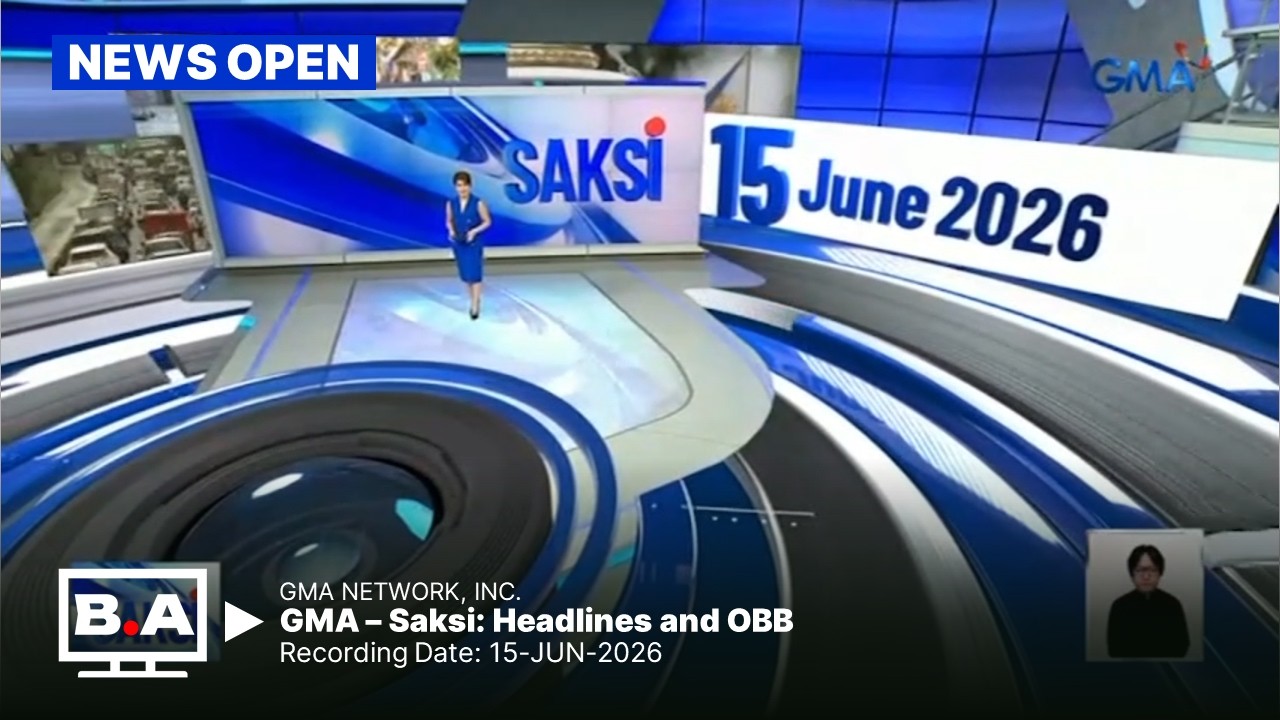
Late news Saksi feels too over the top (but kind of typical of news intros in SE Asia):

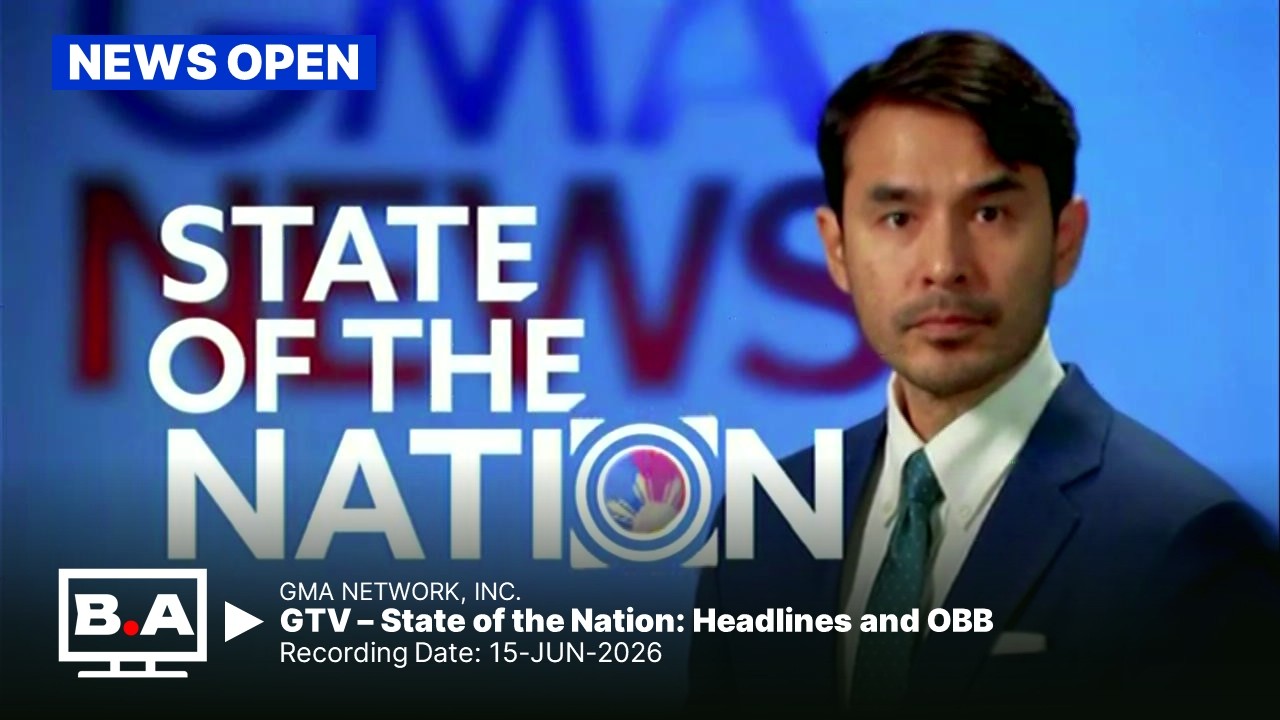
And State of the Nation has a completely different colour scheme:


Apparently the channel recently revamped their programme lineup, with one of the new additions being the 1pm news. The colour scheme looks familiar


Still think the channel name is a mouthful.

1 Like

Delighted to have started my new gig as a Breaking News Host - @CBC News Network 🌎 pic.twitter.com/XIpnXyFCkY

— Darren McCaffrey (@darrenmccaffrey) June 30, 2026

1 Like

Some new stuff last week


Curvy white structures seem to be a popular design choice for news operations in Riyadh, as this local Bloomberg affiliate moves into their new headquarters with new studios:

The actual studio for the opening show looks bigger:

Other programmes seem to use a different newsroom


Their sister business channel has updated to the new wordmark and graphics after nearly a year:

Pushback et al in action:

The programme promos are remarkably different from the main channel’s.

2 Likes

The reform has been approved, unsurprisingly, by the Tisza majority. Of course, the far-right opposition has complained, saying that it was made “too quickly”. The Orbán-appointed heads of both MTVA (Dániel Papp) and the Duna Media Service Corporation (Anita Altorjai) have been dismissed and MTVA will be very soon dissolved, with its operating charges temporarily subsumed into the Duna Media Service Corporation, which will then be reorganised to form the new MRTV and MTI nonprofit corporations.

The Culture Committee of the Hungarian National Assembly has appointed a lawyer, Dr. AndrĂĄs P. HorvĂĄth, as acting CEO of both companies. Little is known of his background, being only publicly known that he leads his own practice. He has no media experience, but he will be only focusing on sorting out the legal and economic background of the entire public media transformation, including uncovering mishandling of public finances and operating procedures inside MTVA and the Duna Media Service.

This is just the start of a longer process that will take several months to complete.

2 Likes

And the Hungarian public media reforms have started
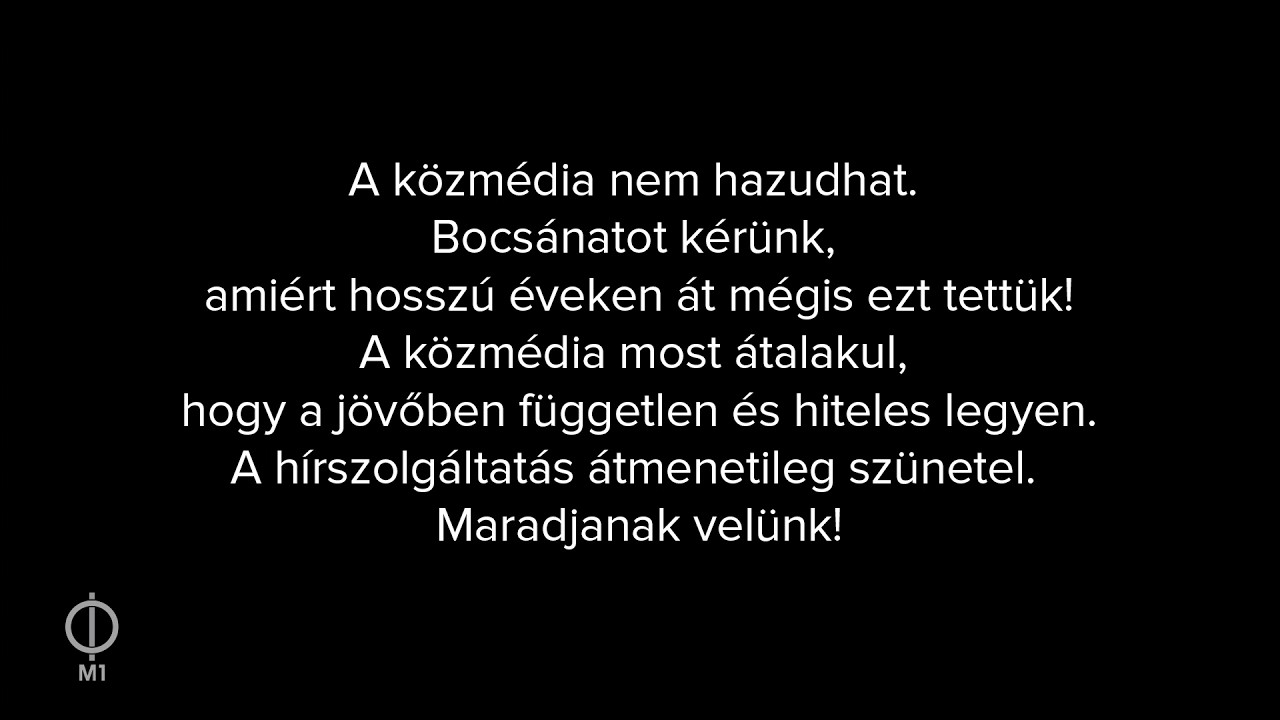
 as promised by PM PĂ©ter Magyar, today M1 and Kossuth RĂĄdiĂł ceased airing regular programming effective 4pm local time; MTVA’s news portal HĂ­radĂł.hu has been also turned off temporarily. M1 and HĂ­radĂł.hu are showing this message:

Public media must not lie. We apologize for having done exactly that for so many years! Public media is now undergoing a transformation to become independent and credible in the future. News services are temporarily suspended. Stay with us!

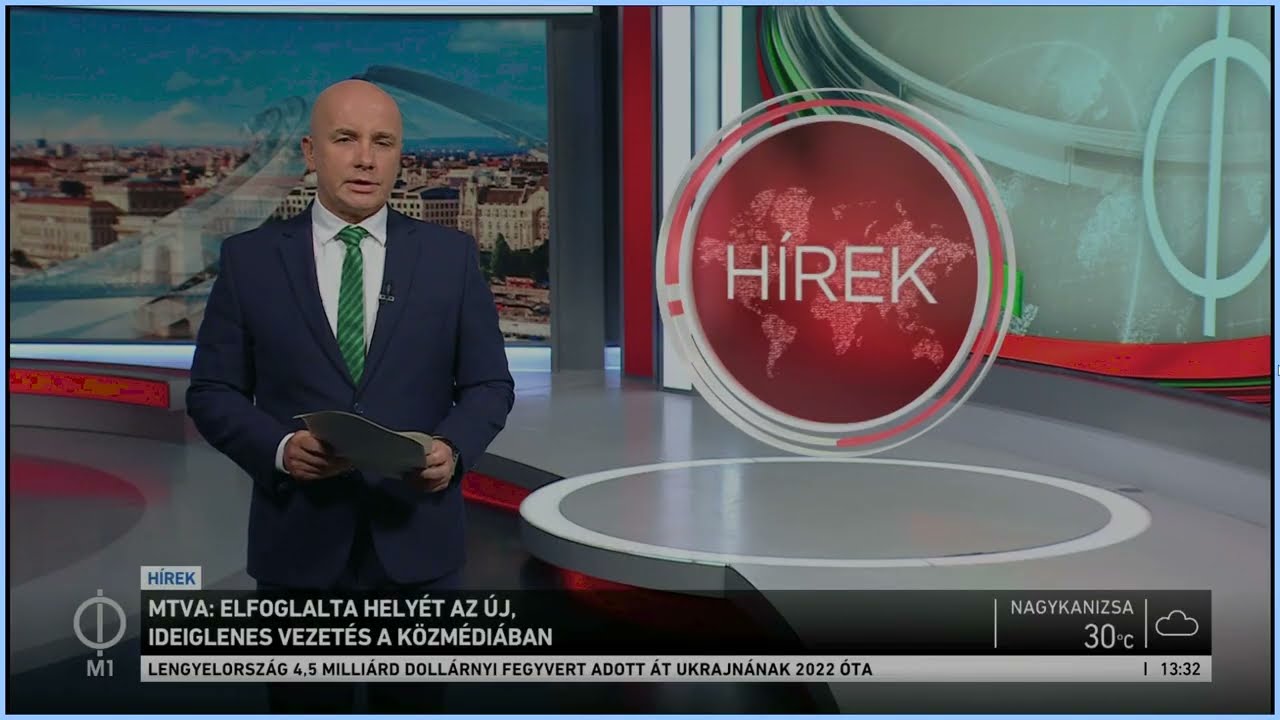
Beforehand, Csaba Radnai had announced the news on M1’s 1pm news bulletin:

M1 is set to resume broadcasting later tonight, airing a makeshift schedule reportedly airing primarily “films”; however, Mediaklikk, MTVA’s VOD platform, says it will temporary switch to airing M3, which had been a linear TV channel from 2015 to 2019, and since had become a video stream of archival programming.

In a communication with MTI (which continues to provide its news stream), MTVA’s press office said that “the black screen once again symbolizes the end of an era. In recent years, the public media has come under the influence of political power and has lost its main function: providing authentic and objective information to the public. Instead, it became a forum for incitement to hatred and lies. This will change from now on”.

Duna, which simulcast M1’s propaganda bulletins during key timeslots, is filling the time with archival programming; for example, during the 6pm slot today, they took an episode of a classic soapie, Kisváros (lit. Small Town), which MTV produced from 1993 to 2001. Kossuth Rádió, in the other hand, is temporarily simulcasting classical music service Bártok Rádió.

The move comes as AndrĂĄs P. HorvĂĄth has started laying off most of the OrbĂĄn era MTVA staff, including propagandist Zsolt NĂ©meth (who led M1) and RĂłbert KĂĄrĂĄsz, who led the Duna Media Service’s content strategy, but also key presenters like Attila CsĂĄszĂĄr, who was even forcibly escorted by police guards, saying that this was an “humillating practice”. OrbĂĄn-era Kossuth RĂĄdiĂł editor-in-chief Beatrix SiklĂłsi and technology director Anett Olbort were also among the layoffs. Fidesz MP BalĂĄzs NĂ©meth said that, with the layoffs, “the political showdown has also started in the public media”, and accusing the layoffs of being politically motivated.

HorvĂĄth has appointed temporary management to lead the new structure: BalĂĄzs Bodacz is temporarily leading the news division; he was a former director at Lajos Simicska’s media outlets (including HĂ­r TV and Magyar Nemzet) during the time it distanced from OrbĂĄn, and then moved to ATV, a news and religious channel owned by the Hungarian Faith Church and one of the few remaining opposition outlets during the latter years of OrbĂĄn’s regime; György KerĂ©nyi takes over as Kossuth RĂĄdió’s editor-in-chief; he had led the station during the final years of Ferenc GyurcsĂĄny’s government; ZsĂłfia MĂ©szĂĄros, who comes from major online opposition outlet 444.hu, will lead MTVA’s online portal during the transition.

Péter Koltai is temporary serving as secretary to Horvåth, whilst Såra Teszåry will temporarily lead the press and marketing office, serving as de facto spokesperson.

Obviously, Orbán is not impressed, and has published on his social media that it was “another step in the arbitrary cleaning” of state media, asking supporters to watch Hír TV, still controlled by Orbán’s cronies. That network has supposedly told viewers to protest in front of MTVA’s for a rally set for 7pm. In contrast, PM Magyar has celebrated this first step, calling it a “historic day”, and reflecting on the moment: “The broadcasting of propaganda on public media platforms ended today. They lied at night, they lied during the day, they lied on all wavelengths. That’s over now”, he said.


Speaking of European conservative media
 the American conservative, pro-Trump news brand Newsmax has launched another localised brand in Europe, this time, in Poland. Newsmax Polska launched as a full fledged TV channel, in July 4 of all days, after being launched as a online website in April. The network, legally licensed in the Netherlands and owned by the Newsmax Balkans partnership with Telekom Srbija, joins a sleaze of conservative news outlets supporting the right-wing populist Law and Justice party, which have boomed in that nation after the sworning in of Donald Tusk’s liberal government.

The most well-known of these outlets are the long-standing Telewizja Republika (whose audience figures increased after Tusk’s reforms to TVP, luring many of the high profile TVP journalists under PiS control, beefing up its daily programming schedule to cover almost the entire day, and also covering PiS rallies live) and wPolsce24 (launched in 2017 as part of conservative media group Fratria, which owns a number of conservative news websites and the also conservative newsmagazine Sieci); both channels are available nationally on the DTT network since 2024.

The project is led by Wojciech Surmacz, former director of state owned news agency PAP, and features various former TVP, Polskie Radio and PAP journalists which worked during these companies’ effective control under PiS, including Maciej Chudkiewicz, Marta Kosik, Jacek CholewiƄski, Agnieszka Piechurska, Adrian Kowarzyk, Jaƛmina Nowak, Krzysztof Puternicki, Urszula Rzepczak and StanisƂaw JegliƄski. The network is available currently on Polsat’s TV operators (Polsat Box, Polsat Box Go and Netia TV) and as an HbbTV streaming channel on the DTT network (national mux 8).

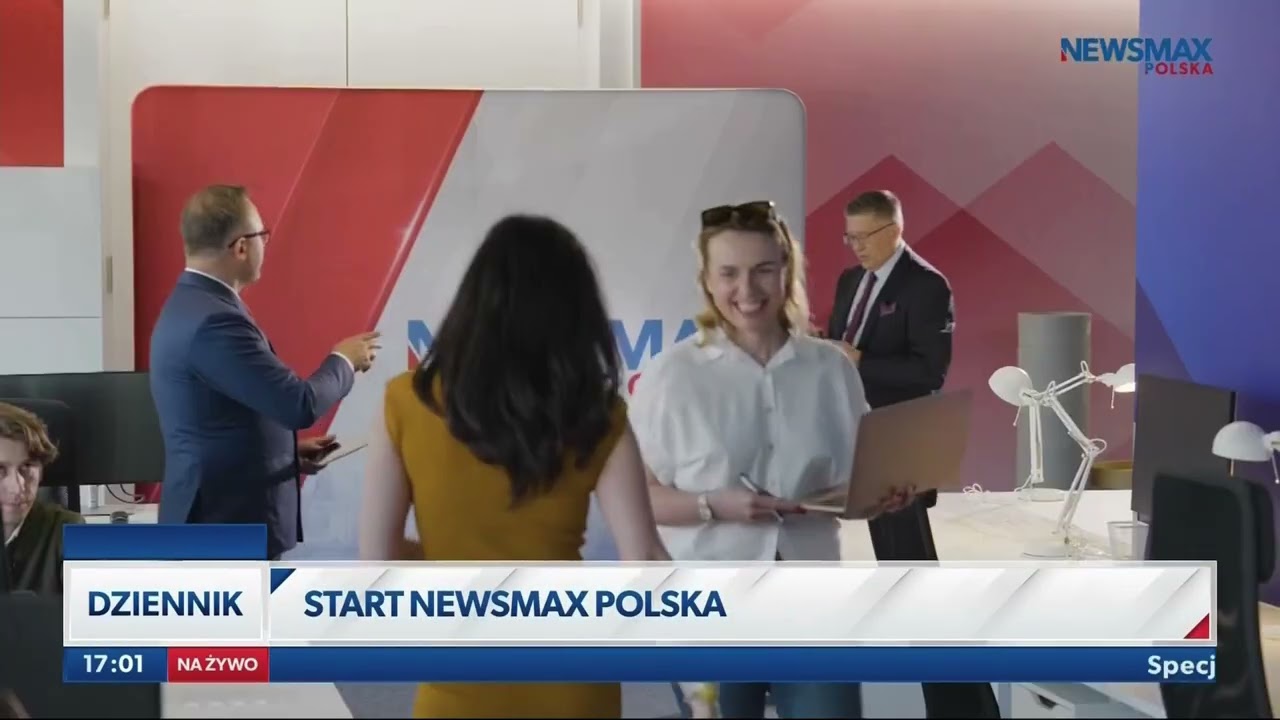
Rzepczak, a former TVP correspondent in Rome, anchored the first news bulletin at 5pm, which included, ironically, as its first report, a story on the July 4th celebrations
 reported by a Serbian reporter from Newsmax Balkans! It was all translated into Polish, obviously, but it became clear this new network is still a long way to be able to be a formidable competitor to its counterparts. The network also covered celebrations from across the U.S., also using Newsmax Balkans resources. The network will also air Newsmax TV opinion programming, also translated into Polish.

Here’s a look at the first moments of Newsmax Polska:


To Spain now
 the first commercial competitor to TVE’s Canal 24 Horas is about to start in a few months’ time. Enter La SĂ©ptima, the first national commercial news channel to be established in Spain since the closure of CNN+ in 2010, starting November 5.

The network will be operated by the SIETE (Servicios Integrados de Entretenimiento Televisivo) consortium, led by a group of shareholders inside PRISA, Global Alconaba, which is led by a veteran media businessman, AndrĂ©s Varela Entrecanales and veteran media manager and entrepeneur JosĂ© Miguel Contreras; both were influential in establishing some of Spain’s biggest media and entertainment companies, including production house Globomedia, Imagina Media Audiovisual and Mediapro, and TV channel laSexta (now majority owned by Atresmedia), and have close ties to the ruling Socialist Party.

They tried in early 2025 to convince the owners of El PaĂ­s and Cadena SER to reenter the domestic TV market after PRISA sold its TV outlets to Mediaset and TelefĂłnica; however, the company’s president and largest shareholder, French-Lebanese raid investor Joseph Oughourlian, staged a board coup that led to the cancellation of the project and led to the resignation of Carlos NĂșñez, who led PRISA’s media content division. Eventually, the Global Alconaba members would leave PRISA’s Board of Directors during the first half of the year.

This led to the Global Alconaba consortium to go on their own for the project. The project is reportedly supported by Argentinian businessmen Gustavo Scaglione (majority owner of Rosario’s Grupo TelevisiĂłn Litoral, which control the city’s biggest TV station, LT 83 Canal 3) and JosĂ© Luis Manzano (through his private investment fund Integra Capital); both acquired from Paramount (before concluding the Skydance merger) in late 2025 a controlling stake in Telefe, including its remaining O&Os (some of which were reunited with other affiliates Paramount offloaded during 2024 and 2025 to Scaglione), and have already stakes in the parent company of AmĂ©rica TV. Portuguese media company (and owner of TVI) Media Capital is also reportedly supporting the project, and discussions to license the CNN brand (advantages of Media Capital having such a license for CNN Portugal) were made to no avail.

The network initially planned to air a general entertainment programming mix, but they eventually pivoted into a news channel, with an emphasis in a Socialist government-friendly agenda, with debates and current affairs content. SIETE won a national tender to license a new nationwide TV channel in late May, after months of rumours and suspicions of political meddling in the process; the other bidders, Mediaset, were disqualified on competition grounds, given it has already 8 national TV channels.

The network is part of a larger realignment of the Spanish DTT network: on the same date La Séptima launches, the entire Spanish DTT network will be switching to DVB-T2, which will allow the remaining SD channels to go full HD, and will also involve some mux rejigging; the realignment will also mark the launch of a full UHD terrestrial service, with two channels being assigned to PSB RTVE (one of which is already on the air, La 1, most of the time in upscaled HD, but with native broadcasts of UHD content when allowed, and another new), and the other two for the main commercial broadcasters (Atresmedia and Mediaset).

The network is already announcing its launch with this promo posted on its social media:

This, I believe, is a reference to a very infamous speech made 20 years ago by Hungary’s then-PM, and it’s widely regarded as the reason that Fidesz and Viktor Orban were elected in the first place.

1 Like

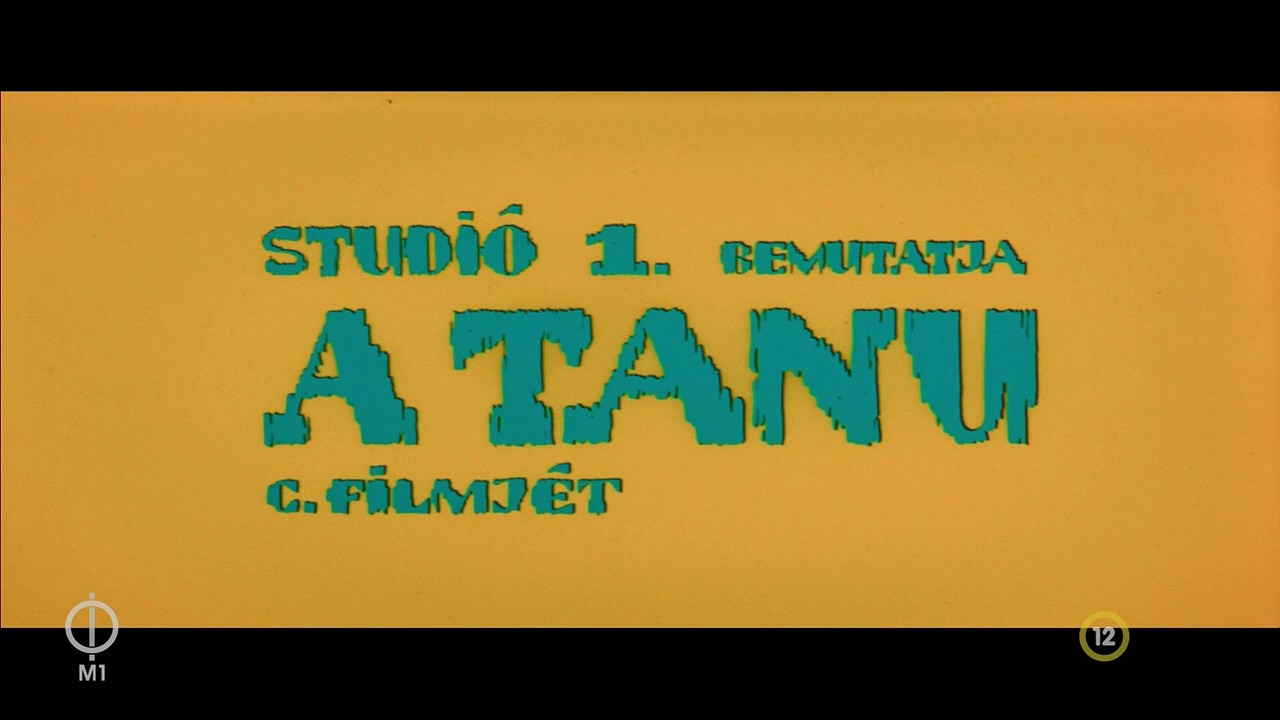
It turned to be this. They returned around 8pm with a Communist-era local film, A tanĂș (The Witness), a classic political satire from 1979. The selection of the film might have been deliberate, as its plot involves the Hungarian Revolution of 1956, and it might have taken into indirect association with the changes happening in both the political landscape and within the MTVA and Duna Media Service.

Worth noting other MTVA channels and services are operating normally, but the radio stations are not airing any news bulletins. Entertainment and sports programming are airing normally as of writing, including M4 Sport with regular World Cup coverage.

This happens as the first OrbĂĄn supporters are gathering outside MTVA’s HQ and studio facilities in Budapest’s KaszĂĄsdƱlƑ district, but quickly both Fidesz and the often called Protective Line parallel security guards (VĂ©dvonal) have discredited the possibility of organizing the protest. In fact, various Facebook posts have been credited to a supposed VĂ©dvonal group in “North Pest”, but further fact checking by independent outlet Telex concluded that it might be a humourous fan page, and that it was clearly a fake account not associated with the VĂ©dvonal. This is what HĂ­r TV had reported earlier in the day.

According to a statement from OrbĂĄn’s party, "Today’s demonstration in front of the MTVA headquarters was not organized by Fidesz or VĂ©dvonal. Since the organizers did not respond to our request following the announcement of the event, we have reason to assume that they misused the name of VĂ©dvonal to announce the event.” The statement was jointly signed by Judit CzunyinĂ© Bertalan, the leader of the Protective Line, and Bertalan Havasi, Fidesz’s communications director. The statement was published around 7.45pm local time, well after the protesters had arrived at MTVA HQ.

In contrast, Fidesz plans to lead a major rally on Thursday in front of the Sándor Palace to protest today’s layoffs and management changes. “We consider any measure or procedure that violates media freedom, editorial independence or the rights of employees unacceptable. [
] We consistently stand up for media freedom and the rights of media workers,” Fidesz wrote in the aforementioned statement.

Hír TV plans to continue broadcasting despite the upheavals, and indeed it plans to remain the voice of the conservative movement and the Fidesz opposition. In a post on social media, they have reaffirmed themselves as the only “television voice of the right” and that they are not fading away, but are only now starting to get stronger.

Of course, this is far from over, and there will be more and more news on how the changes to the Hungarian state broadcaster and the media landscape will impact the country and all its citizens, so we should wait and see, as we will


Global set to move it’s Calgary and Edmonton news production to Toronto. Global’s owners are hemeradging money. Western Standard on X: "EXCLUSIVE: Corus shutting down news production in Calgary, Edmonton, transferring to Toronto https://t.co/4gjn5J0dWT https://t.co/Bdqe3LJ4q4" / X

1 Like

Wouldn’t it make more sense to move it to Vancouver time zone wise?

shame to see CITV and CICT reduced to this. But Global’s (and CTV’s) owners are nufties.

1 Like

I believe the reason they’re moving it to Toronto is due to unions in Vancouver whereas Toronto doesn’t have unions in all of the newsroom.

1 Like

Ouch!

Maybe it’s time Corus just gave up the ghost
sell itself off and find someone who can run the joint properly.

1 Like

Corus are currently penny stocks and would be ripe for a buyout. The advertising revenue has been hit really hard in Canada.

Incredible - I assume maintaining the clipped up playlist type bulletin too?

Doubt there’s a saviour for Global now. I think Canada has stricter rules than Australia re foreign investment in broadcasters.

We could buy Global. :rofl:

Shhhhh
don’t give certain broadcasters any ideas. :rofl:

I could see that changing if they complain enough.

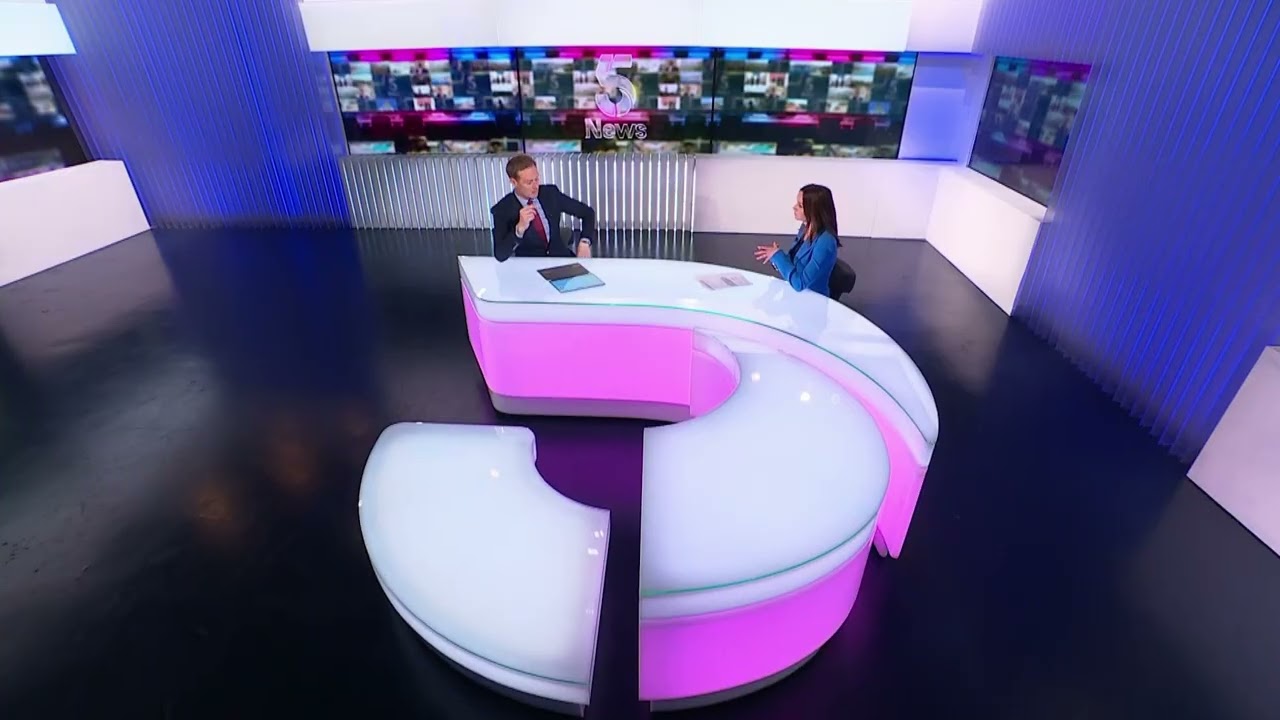
A look at the 5 News UK Package

2 Likes

Correct, the union contracts at CHAN Vancouver, CITV Edmonton, and CICT Calgary are the strongest out of all the unionized Global stations, with CHAN having the best union contract. Moving production to Toronto, where the union is weaker, saves the company money in the long run, but up front the layoffs are a costly exercise as everyone being let go will have a pretty good severance package. The union contracts are publicly available on the Unifor Media One website.

CBC and other media outlets have been reporting on these latest cuts at Global News. What essentially is happening is kind of a mixture of how news is done at 10 Perth (local presentation, remote control room), and how news is done at WIN (pre-recorded anchor reads/read-VOs and stories played out from a playlist), which is called “MMC” (multi-media content) production.

It’s still very sad though, CITV is #1 in Edmonton, and CICT is very competitive against CFCN/CTV Calgary. 50+ years of local TV production at CITV, and 70+ years of local production at CICT are about to come to an end.

Global Regina is a non-union shop, which also explains why there is also a production hub for CFSK, CFRE, and CKND there.

Of relaunches and new beginnings


The revamped RTHK 32 is on air earlier this week.

This is the opener for the 12nn newsbreak:

The flagship 7pm Cantonese news:

And the English Evening News at 8 (with an incomplete opener - same as Cantonese version but with different ribbons):


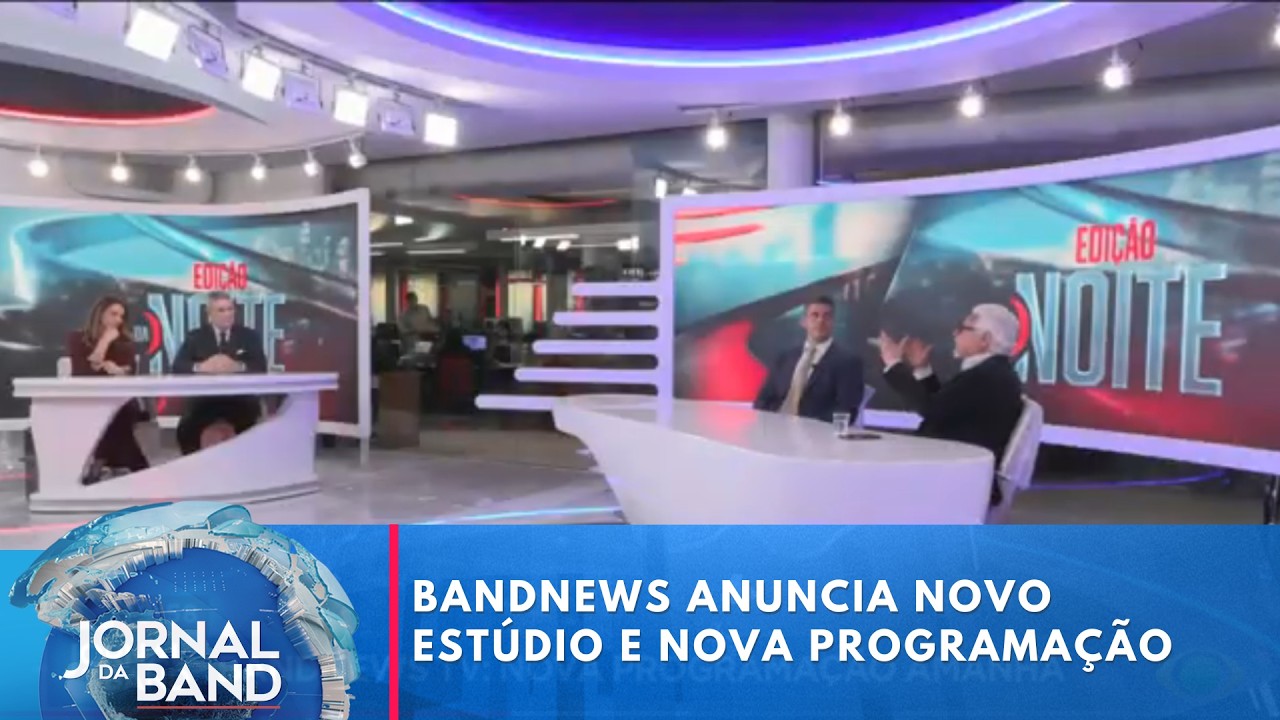
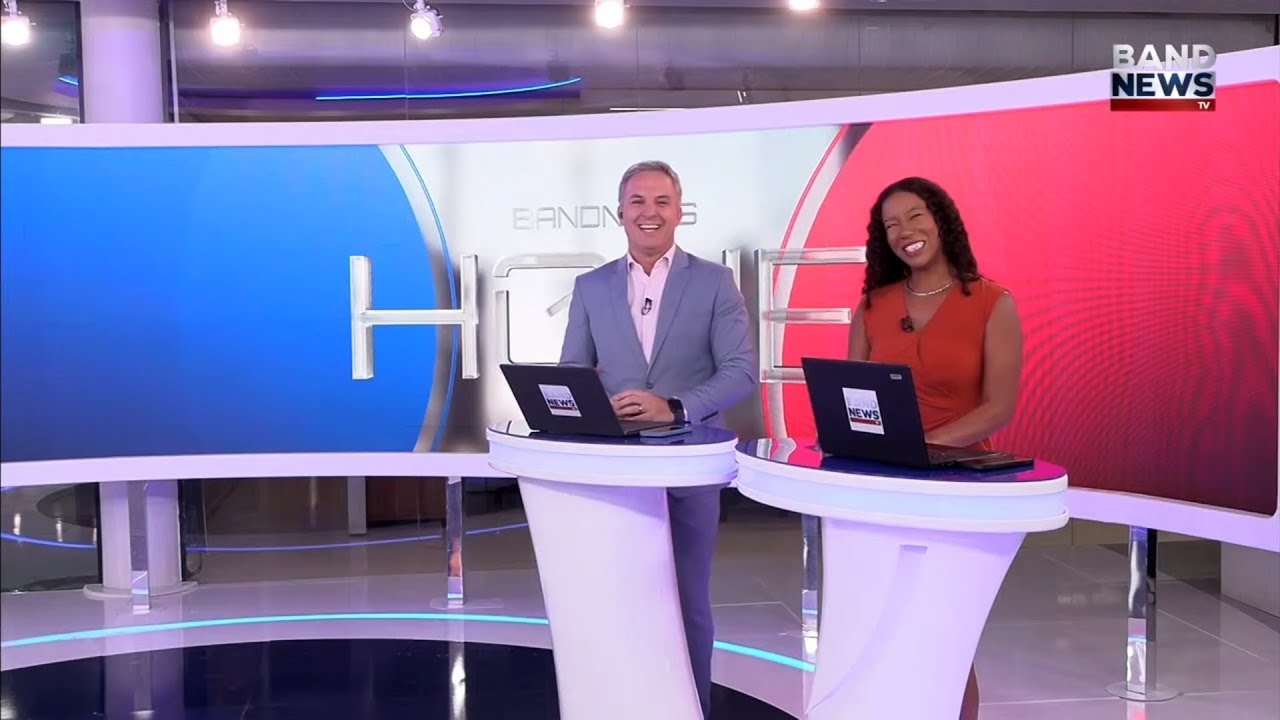
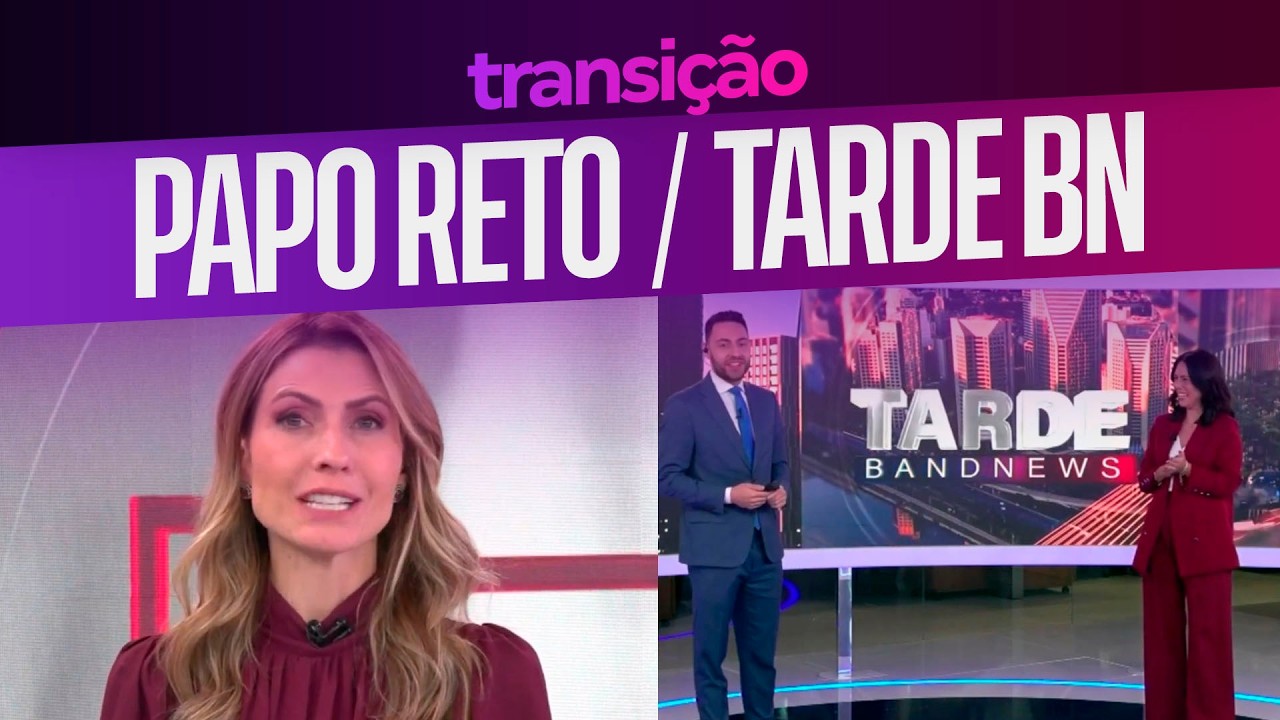
BandNews TV unveiled a new set and slate of programmes to celebrate their 25th birthday.

Equipped with automated cameras, screen pillars and all, the revamped studio in the broadcaster’s São Paulo headquarters aims to demonstrate the channel’s transparency motto - by removing dividers and adding glass walls, but making it look more like a shop window from afar IMO.

As for programming, they injected numerous new faces to strengthen their analysis and commentary offering. More here.

First look around the new studio:

The first morning programme from the new set - very 2000s wordmark with the Bank Gothic similar:

Analysis show O X da QuestĂŁo [The crux of the Question] - probably the most interesting in terms of visual elements among their daytime lineup (others include a news roundup and the 10am news with a Today-esque arch):

The rolling news at noon:

Panorama in primetime:

And the late news, now with more panelists (from this Tweet):

The radio simulcasts received a glow-up on supers too, but what’s the point in adding a studio opener and closer to a midday radio news show?

The graphics is quite dated with the glossy CGI, and especially very sterile in daytime. The silver strap reminds me of the Quincy/Gray local graphics back in 2016:

2 Likes

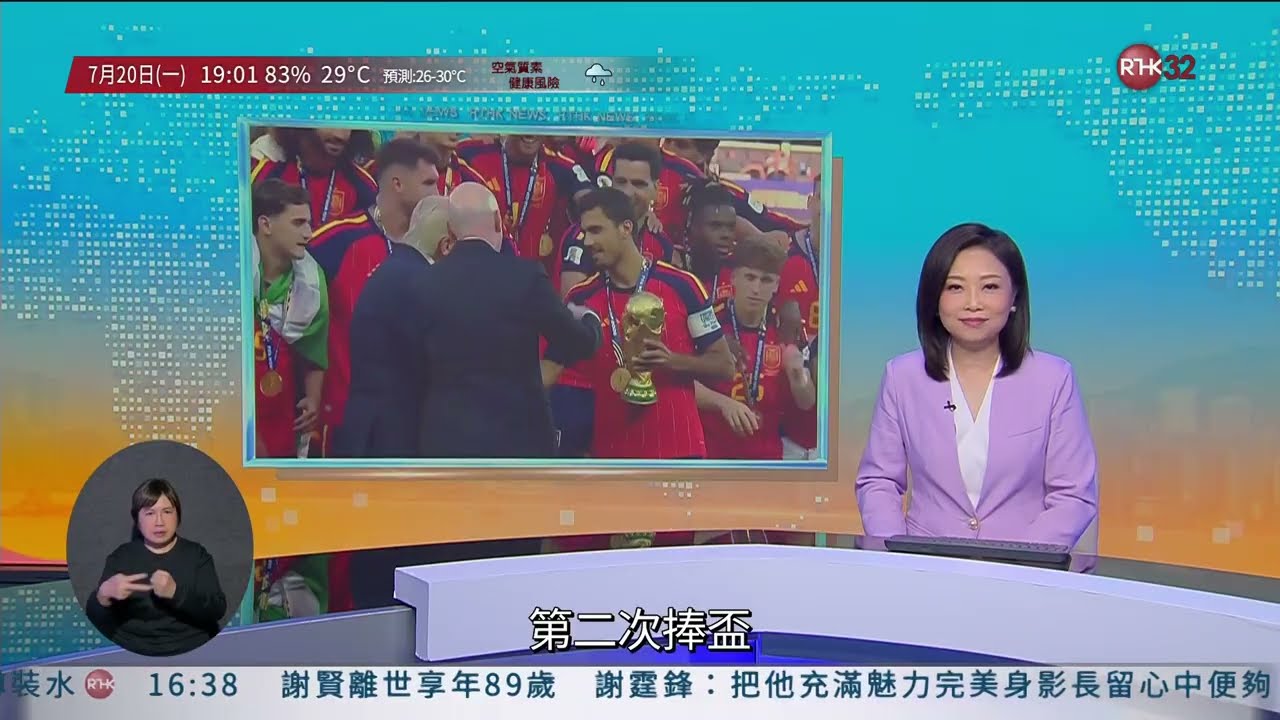
The two RTHK bulletins use the same studio and the same city background, but different LED colours on the background to distinguish between the bulletins. Only the Cantonese bulletin has a sign language interpreter.

RTHK could only use still images of match action for its report on the FIFA World Cup final, due to rights restrictions, but was able to show the video of Trump and Infantino presenting the trophy to Spain.

1 Like