I Was Actually There

I Was Actually There returns to unpack more defining moments in Australia’s recent history
Gripping, powerful and moving, I Was Actually There returns for season two, exploring Australia’s past through the eyes of those who lived it. The new season premieres Tuesday 7 October at 8pm on ABC TV, with every episode available to stream the same day on ABC iview.

From the makers of the ABC’s acclaimed series You Can’t Ask That, I Was Actually There brings together the recollections of those at the heart of the action as well as those who witnessed it from the sidelines.

Along with carefully chosen archive footage, much of it unseen or previously overlooked, I Was Actually There weaves conversational fragments into cohesive narratives, bringing intense moments back to life.

Each episode reveals new ways of seeing the past, challenging what we think and what we know.

What you saw depends on where you were standing. History is personal.

I Was Actually There Season Two:

  • Episode One: Black Saturday Bushfires, 2009
  • Episode Two: September 11 Terrorist Attack, 2001
  • Episode Three: The Dismissal, 1975
  • Episode Four: Cronulla Riots, 2005
  • Episode Five: Fairlie Arrow Abduction Hoax, 1991
  • Episode Six: Sydney to Hobart Yacht Race Tragedy, 1998

PRODUCTION CREDITS: A Docker Media production for the Australian Broadcasting Corporation. Finance by the Australian Broadcasting Corporation and Screen NSW. Executive Producer: Kirk Docker. Series Producers: Loni Cooper and Josh Schmidt. Producers: Lizzie Norman and Laura Grace. Created by Kirk Docker, Aaron Smith and Jon Casimir. ABC Commissioning Editor: Julie Hanna. ABC Head Documentary and Specialist: Susie Jones.

EPISODE 1 OF 6

TUESDAY 7 OCTOBER 8.00PM

Black Saturday Bushfires. Sunday 28 April 1996.

As temperatures hovered in the mid 40s, bushfires of unprecedented size tore across the state. One hundred and seventy-three lives were lost, thousands were left homeless and entire communities destroyed.

Premier John Brumby would describe it as “by a long way, the worst day ever in the history of the state.”

EPISODE 2

TUESDAY 14 OCTOBER 8.00PM

James Dorney was working on the 92nd floor of the World Trade Center South Tower. He saw the North Tower erupt before his eyes.

While most were running away, Channel Ten correspondent Michelle Stone, in New York for the US Open, raced toward the chaos.

This episode of I Was Actually There offers a range of unique perspectives on the events of September 11, from expatriates, family members, journalists, photographers and first responders. In a single morning, they found themselves at the epicentre of a catastrophe that changed their lives forever.

EPISODE 3

TUESDAY 21 OCTOBER 8.00PM

It was a move that shocked the nation. Fifty years ago, Prime Minister Gough Whitlam was dismissed by the Governor-General, Sir John Kerr. The government was dissolved and an election called.

I Was Actually There looks at the day through the eyes of the senators, MPs, colleagues, aides, journalists, and protesters swept up in the chaos.

Half a century on, views on the legitimacy of Kerr’s actions are still strongly held. Whitlam and Fraser would develop a friendship in later years, but no other event has divided the rest of us in quite the same way. Our constitution remains unchanged.

Could it all happen again?

More detailed synopsis of the season premiere.

EPISODE 4

TUESDAY 28 OCTOBER 8.00 PM

On a hot December Sunday, racial tensions boiled over at Sydney’s Cronulla beach. The fuse had been lit a week earlier by an altercation between off-duty lifesavers and men described by police as “of middle eastern appearance”.

Fuelled by copious amounts of alcohol and the encouragement of nationalist groups, the crowd became violent, turning on anyone who even looked vaguely non-anglo.

The event, and the deep-seated issues it highlighted, reminds us how easy it is to let the racism genie out of the bottle, even in a place as supposedly chilled out as beachside Cronulla.

Oops

From ABC:

Black Saturday date

I Was Actually There : In the episode broadcast on 7 October 2025, an end card stated that the Black Saturday bushfires occurred on 28 February 2009. In fact they took place on 7 February 2009, as prominently stated at the start of the episode. The end card has been corrected on ABC iview and for all repeat broadcasts.

Opening:

Closing:

More corrections:

I Was Actually There : End cards in two episodes published on ABC iview contained errors and have been updated. The end card in season 2 episode 2 (‘September 11 Terrorist Attack’) incorrectly stated the overall death toll of the World Trade Center attacks and the number of first responders who died in the attacks. The end card in season 2 episode 3 (‘The Dismissal’) referred to Gough Whitlam having resigned as Labor leader after the 1978 election; the election in question took place in December 1977. Both cards have been corrected on ABC iview and for broadcast.

EPISODE 5

TUESDAY 4 NOVEMBER 8.00 PM

When nightclub singer Fairlie Arrow disappeared from her Gold Coast home in 1991, the tabloid media went to town.

Arrow was reported as abducted, in the clutches of “an obsessed fan”. The nation was glued to its television sets. Spoiler alert. It was all a hoax.

For two days, Fairlie Arrow was holed up in a motel room, watching everyone lap up her big lie. Determined to sell the story as real, Arrow placed herself bound and gagged on the side of an isolated roadway, where she was discovered by teenagers out for a joyride in a hand-me-down Toyota Corona.

More than 30 years later, she insists celebrity was never her motive. So where does the truth lie?

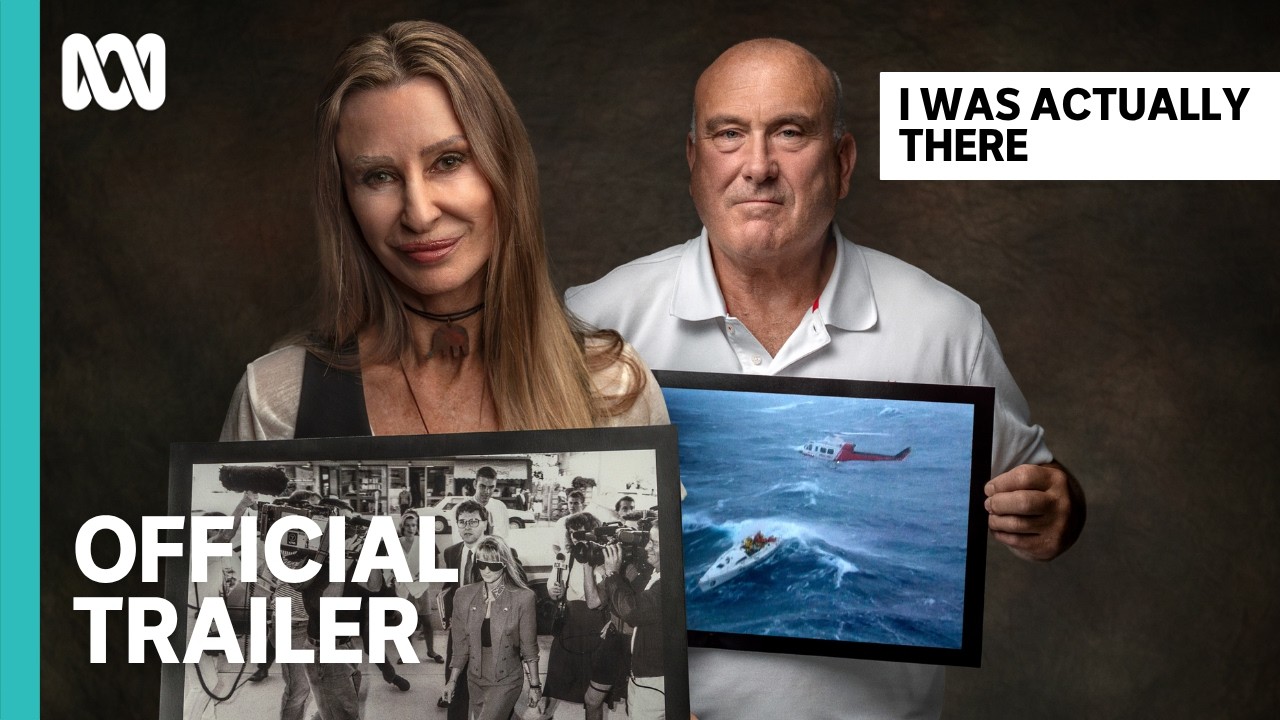
John Howard and journalist Niki Savva (the woman holding the photo) are some of the people who have appeared in The Dismissal episode.

EPISODE 6 - Final

TUESDAY 11 NOVEMBER 8.00PM

The 1998 Sydney to Hobart race was a moment when nature asserted its dominance with terrifying force.

Six lives were lost, five yachts sank and hundreds of sailors were pulled into a brutal fight for survival as the sea turned violent and merciless.

Of 115 boats, only 44 finished the race. Others turned back, limping into the safe haven of Eden, where locals stepped in to help the shell-shocked crews.

It was the largest peacetime search and rescue operation in Australian history. This episode asks what drives us to face the risks of the unknown - and what happens to us when those risks become nightmares.

ABC Showcase 2026 announced returning with a new season next year.

1 Like

I Was Actually There returns with the stories Australians remember. But not like this.

|495xauto

I Was Actually There returns with six extraordinary stories told by the Australians who unexpectedly found themselves at the centre of history.

Intimate, moving and surprising, the series places viewers inside the moments they thought they knew, until now. It premieres on Monday 9 November at 8pm on ABC TV and ABC iview.

The events that come to define a nation aren’t always the ones you’d expect. The most important moments in our history don’t necessarily stand out at the time. They might take days, months or even years and sometimes it’s only looking back that we realise their significance.

Told exclusively by the people who witnessed the events, I Was Actually There captures the chaos, fear, adrenaline and humanity of being caught inside history as it unfolds.

These are the stories Australians remember. But not like this.

I Was Actually There – Season Three:

Episode One: Julia Gillard’s Misogyny Speech, 9 October 2012

Episode Two: Thredbo Landslide, 30 July 1997

Episode Three: Cangai Siege, 30 March 1993

Episode Four: Prime Minister Harold Holt Disappears, 17 December 1967

Episode Five: The Rabbitohs’ Fight Against Extinction, 15 October 1999

Episode Six: Lismore Floods, 28 February 2022

PRODUCTION CREDIT: A Docker Media production for the Australian Broadcasting Corporation. Finance by the Australian Broadcasting Corporation and Screen NSW. Director: Kirk Docker. Series Producers: Loni Cooper and Josh Schmidt. Producers: Lizzie Norman, Jess Cohen Cornelius, Tara Thomas. Created by Kirk Docker, Aaron Smith and Jon Casimir. ABC Commissioning Editor: Julie Hanna. ABC Head of Documentary and Specialist: Susie Jones.

Season 3 - Episode 1 of 6

MONDAY 9 NOVEMBER 8.00PM

A heated parliamentary debate unexpectedly produced one of the most influential political speeches of the 21st century. In this episode, Australia’s first female PM, Julia Gillard, joins political allies and opponents, journalists and eyewitnesses to reveal the story behind the speech that would define her legacy.

And for the first time, former Opposition Leader Tony Abbott appears alongside Ms Gillard in the episode, to reflect on the speech that was aimed at him.

EPISODE 2

MONDAY 16 NOVEMBER 8.00PM

The 1997 Thredbo landslide was one of the first tragedies in Australia to unfold as a rolling, live media event, with reporters broadcasting from the mountain and audiences clinging to updates. After 54 hours, the country stopped as news broke that a sole survivor had been found alive.

Many of us remember how it felt, waiting and hoping for confirmation that Stuart Diver had made it out. But what if you’d been on the mountain, hoping your friends would also be found alive, or reporting from the scene, where for days there were stories without hope? What if you’d been a rescuer, fighting the freezing cold as well as the landslide?

Ben Fordham, a 21-year-old junior reporter at the time, remembers getting a call at 1am to “Get to Thredbo.” He recalls the first time he saw the site, hungover from the night before. “It was like a giant had stomped on the side of a mountain.”

Paul Featherstone, the paramedic who talked Diver through his intense and risky rescue, reveals a ‘white lie’ he told the skier. “I promised him at the end of the day, we will see the beautiful mountains and the snow-capped mountains and all that. I said, ‘I’ll show you that before we put you in the ambulance.’ And I figured I’d do that whether I was successful or not.”

This ‘miraculous story of survival’ has been told many times. But what becomes evident when you hear it told by the people who were actually there is that this isn’t just a story about a landslide. It’s about how quickly normal life can collapse. And how the truth of the event isn’t one man’s story.

INTERVIEWEES:

Stuart Diver The sole survivor

David Kuhn Ski Patrol Officer who was one of the first on the scene

Wendy Hukins Thredbo ticket box manager

Glenn Milne Television reporter who was on a skiing holiday Jodie Evans Restaurateur who fed the rescuers

Paul Featherstone Intensive Care Paramedic who became Stuart’s main support

Ben Fordham Radio reporter who was 21 years old at the time Geoff Courtney Firefighter who took off his glove and held

Steve Hirst Firefighter who was the first to hear Stuart and alert everyone he was alive

Sad health update on Todd Russell.

EPISODE 3

MONDAY 23 NOVEMBER 8.00PM

After a spree of murders across NSW and Queensland, three criminals, with two child hostages in tow, holed up inside an empty farmhouse outside the tiny country town of Cangai in northern NSW. Their one, chilling goal was to challenge police to a shootout to the death. What followed was a stand-off
between the criminals hellbent on going out in a blaze of glory; the police trying to rescue innocent hostages; and a frenzied media.

For local cops Megan Sommerlad and Allan Tutt, the day started with a vehicle check on a reported stolen car. The situation quickly escalated into a highway ambush by the criminals and a high-speed chase down country roads. The criminals holed up in an unlocked farmhouse whose resident, Kath Hill, wasn’t home because she’d “gone into town to buy new undies” for her son.

Back in Sydney, police psychiatrist Dr Michael Diamond was paged to join the negotiator team to commence negotiations with the kidnappers. In the midst of trying to ascertain the welfare of the children and what the kidnappers actually wanted, the phone line into the house became increasingly blocked by journalists who had managed to find – and share – the phone number.

For them, the situation looked like ratings gold. Radio reporter Tim Collits recalls: “Got a man’s voice on the phone. ‘Hello.’ … I said to him, ‘Who am I talking to?’ He said, ‘Robert.’ I said, ‘Robert Steele?’ He said ‘Yeah.’ I was talking to one of the wanted men.”

Police tactical operations assaulter, Bill Dodson, whose job was to “rescue hostages and take out baddies,” was flown in to be part of a team that also included snipers and other armed police specialists. Backed by the negotiators in Sydney, they oversaw a climax that ended an extraordinary 26 hours of drama.

INTERVIEWEES:

Bill Dodson Police tactical operations assaulter who forced entry into the farmhouse

Allan Tutt Police detective who was ambushed and shot at by the gunmen

Megan Bertus (née Sommerlad) Local police officer who received the kidnapped children once they were released
Kath Hill Resident of the farmhouse under siege

Russell Farmer Cangai local who lived at a neighbouring property

Dr Michael Diamond Police Forensic Psychiatrist who was part of the negotiation team

Tim Collits 2WS radio news journalist who was the first to speak to a gunman on the phone

Peter Charley Channel 7 current affairs news reporter on the ground in Cangai

Leigh Hatcher Channel 7 news reporter, spoke to gunman “as live” from the news desk

Sneak peek of episode 1

Extended synopses including interviewees

https://tvtonight.com.au/2026/11/i-was-actually-there-nov-9.html

EPISODE 4

MONDAY 30 NOVEMBER 8.00PM

“The Prime Minister is missing.” Words that no one ever thought they’d hear. On a December day in 1967, the nation was plunged into disbelief when PM Harold Holt disappeared while swimming at Cheviot Beach on Victoria’s Mornington Peninsula. Holt, an experienced swimmer with a lifelong love of the ocean, was swept from view by powerful waves and a fierce undertow.

Eyewitness Alan Stewart recalls the moment. “I saw him swimming contentedly and calmly. But then the surf suddenly built up. There was a lot of foam in the waves. Harold Holt was white-haired, so you couldn’t really see him in that foam … the surf suddenly built up and took him.”

An unprecedented search began, with police, military personnel, divers, helicopters and surf lifesavers called in. Detective Bill Kneebone remembers arriving at the beach, thinking it all might have been a hoax, but then seeing the roiling waters: “We just looked at the scene and said, ‘Jesus, if he gets out of this alive, it’d be a miracle.’”

Army apprentice Rob Fry was one of hundreds of volunteers who joined the search for the most powerful man in Australia. “We did an extended line from the beach to the edge of the water saying, ‘Harold, Harold, where are you, Harold?’”

The disappearance drew worldwide attention, culminating in a memorial service attended by world leaders. Holt’s niece, Sue Guigni (née Holt), travelled to the service from London with a very special guest. “When I got on board the Royal Jet, I called him Prince. ‘Hello, Prince Charles.’”

For Holt’s son Sam, the loss remains deeply personal: “It was a simple accident. He overestimated his ability in the water. He paid the price. Yes, it is in one sense a historic event, but in the other it’s a very personal event because after all, he was my father.”

INTERVIEWEES:

Alan Stewart Eyewitness who saw Harold Holt disappear in the surf
Martin Simpson Teenager on the beach when Holt went missing
Bill Kneebone Detective who was first on the scene
Ian McEachern & Julian Hunt Life savers called in to save Holt
John Simon Police diver who searched for the missing PM
David Johnston Reporter who broke the news
Sam Holt Harold Holt’s son who learned his father was missing via the radio
Rob Fry Army apprentice who was called in to search for the PM
Sue Giugni (née Holt) Harold Holt’s niece who flew home to Australia from London with Prince Charles
Don Campbell, Ross Stevenson Choirboys who sang at Harold Holt’s memorial & service