The late and great David Crane personally did. Years of chipping away and quiet diplomacy.
2 Likes
Instead of more rollouts in regional areas, what DAB+ badly needs is regulation. That seems like the highest priority to me.
The more I’ve learned about it the more I’ve realised it’s an issue of two different ways of seeing the world: are you anti-regulation or pro-regulation? Do you think it should be every man for himself, everyone out for their own business interests and nothing else, or that rules should govern how companies behave for the good of society?
That’s the difference between a billion stations playing garbage in 5kbps that are mostly cost-cutting loopholes for greedy corporations, or a handful of quality stations in 128kbps+, including government and community broadcasters, offering a supplement to FM that is actually meaningful.
2 Likes
Sadly they picked the wrong horse for this 26 years ago & that horse has long bolted. Should’ve been DRM+ from the start
3 Likes
True — and while the original rollout of DAB+ had its flaws, it’s now part of the broadcasting landscape, so the conversation needs to shift from whether we use it to how we use it properly.
First, we need to address the way DAB is being treated as a workaround to minimise streaming and content royalty obligations. If broadcasters are using digital channels as a technical loophole to reduce what they pay creators, that undermines the sustainability of the entire audio ecosystem. Digital distribution shouldn’t be a discount backdoor — it should be structured in a way that reflects actual audience reach and commercial benefit. If a station is effectively operating as a national or multi-market digital brand, its fee structure should reflect that reality.
Second, rather than allowing DAB capacity to be used primarily for low-cost simulcasts or format clones, policy settings should actively encourage diversity and public value. One constructive approach would be to introduce a tiered licence model — offering meaningful fee discounts or incentives to digital-only stations that demonstrably serve underserved communities.
That could include:
- LGBT+ audiences
- Culturally and linguistically diverse communities
- Emerging migrant communities
- Youth audiences outside metro centres
- Niche music genres with limited commercial viability
If spectrum space is a public resource, then its allocation — even in digital multiplex form — should deliver public benefit. Offering discounted digital licences tied to measurable community service obligations (local content quotas, language programming, community engagement metrics, etc.) would be a far better use of DAB capacity than simply multiplying identical commercial formats.
We should also be having a serious discussion about geographic equity. At the moment, DAB+ remains concentrated in capital cities, while major regional centres are left behind. If we’re serious about digital transition, rollout should be extended to significant population hubs like the Sunshine Coast, Geelong, and the Illawarra, among others. These aren’t small towns — they’re substantial, economically active regions with diverse communities that would benefit from expanded digital services. Continuing to confine DAB primarily to metro markets reinforces the very regional imbalance policymakers claim they want to address.
Beyond terrestrial digital, it’s my belief we should also be looking at a publicly funded satellite radio platform to ensure truly universal coverage. Rural and outback communities are always the last to receive new broadcasting infrastructure, and often the most expensive to service. A government-backed satellite service could guarantee national coverage regardless of geography.
Under that model, the government could subsidise or fully fund receiver equipment for households in remote and very remote areas, while others could purchase compatible radios at market cost. The platform would carry core national services such as Australian Broadcasting Corporation and Special Broadcasting Service, along with Aboriginal community-controlled radio services, free of charge.
Additional capacity could be made available on a paid access basis for other operators — for example Vision Christian Media, commercial radio networks, and other specialist services that wish to participate. That way, the public interest component is guaranteed, while still allowing broader industry participation on a sustainable footing.
In short, DAB+ shouldn’t be a race to the bottom on costs or a metro-only experiment. It should be part of a broader, modernised national audio strategy — one that closes regulatory loopholes, aligns fees with digital reach, incentivises genuine diversity, expands into major regional centres, and ensures rural and remote Australians are not left behind in the transition to digital broadcasting.
3 Likes
All very well, but who’s going to pay for it? The commercial operators aren’t interested, and neither is ABC.
Indeed. Like 30 years ago.
I’m in two minds about this - the reality is that it’s unlikely that an incumbent who controls a DAB allocation is going to be that interested in a service that is going to drag listeners away from their main station, so we end up with a collection of niche or limited appeal stations. These additional services also provide a potential funding stream for a class of media that is always crying out about declining revenue.
That said, regardless of the quality of the output, there is going to be a floor to the limit of bandwidth before it becomes difficult to listen to for a broad audience. I’m unconvinced that 128kbps stations serve much broader purpose other than for a small (comparatively) number of listeners who want better quality audio.
Digital Radio (regardless of the flavour) offers an amazing opportunity to have a broader collection of stations, including new investment, that isnt exactly practical in a highly competitive analogue environment - but given that would upset the status quo, we can’t seemingly have good things so we end up with this hybrid donkey.
3 Likes
I’m surprised the federal govt won’t give some $$ for the ABC to roll out its full suite of DAB services to the 5 major regional markets that currently don’t have DAB.
Even if commercial radio aren’t interested, at least Labor could help fund the roll out for ABC/SBS in the 5 big regional cities, to reduce the digital divide.
2 Likes
Is there evidence for this? Why is it that the first thing DAB+ marketing always leads with is some kind of misleading statement implying that it sounds better? “Digital sound”, “clearer” etc. Surely there is a relationship between the unpopularity of DAB+ and the fact it sounds bad? I’m unconvinced by “People don’t care”, I mean that would have more weight if more of them were actually listening to it!
The flaws in the DAB roll out are a feature, not a bug.
DAB+ was chosen over DRM+ or IBOC formats that would suit Australia’s market better, because it makes it harder for small operators and uses spectrum in an inefficient way.
This maximised the spectrum landgrab while minimising the threat of competition - a perfect balance for a market with regulatory capture, and a government fearful that if they opened up competition that the existing media owners would use their airwaves to attack them.
I think there’s no need to establish DAB further - funds for expanding broadcast coverage are better spent on mobile blackspot infill, not letting the ABC take on the costs of making DAB ready sites for commercial broadcasters to piggyback on.
The policy change I’d make is use it or lose it DRMT licenses. Regional markets have had a decade plus to get on air, they had their chance. Let a new entrant offer services in regional areas - they will have a profit motive to make it work.
3 Likes
You keep pushing this narrative that no-one is listening, but the listener numbers for DAB stations (via Terrestrial) suggest that the number of listeners to DAB are significant
2 Likes
An interesting sidebar is what happened in Singapore, you know the country where digital literacy is paramount. In fact I was surprised to learn they were the first to trial dab back in 1999, maybe they went to soon with the inferior MP2 audio codec? In 2011 when they discontinued the key reason was “the effectiveness and reach of DAB has diminished over time with advances in technology which has widened the receptivity of radio through online streaming as well as mobile phone apps” and as Australia is at least 5-10 years behind Singapore in digital awareness I guess we know what they meant ( Digital Audio Broadcasting service to stop transmission )
1 Like
How does it stack up to the internet and FM though?
GIF of Meryl Streep applauding
1 Like
There’s not too many of those. You get jukebox stations that are essentially getting iTunes to pull up a playlist of a chosen decade and shuffle is pressed, or you get sponsored stations like Cole’s radio.
The only ones using DAB correctly (in my opinion) are Gold, Smooth and Vision.
Gold and smooth because they are using it to broadcast stations they are putting effort into. In Brisbane, smooth rates well because they fill a market hole and actually invest in smooth brisbane with DJs and competitions. . That’s why they rate so well.
I say vision uses Dab well because they use it to fix the shortfalls in there LPON network. I have a vision lpon less than 2km from me and I can’t pick it up. Dab comes in clear in both my house and car during my commute
1 Like
Easier to whip out a smartphone and listen to JOY or whatever narrowcast station is around rather have to fiddle around with a radio because the signal won’t penetrate inside your bedroom… If we had higher population density it might work but we don’t..
Also for those who think that a VAST / XM type system would work great here, have a think about why VAST is encrypted…… it’s pretty easy to figure out once you hear how much infighting went on between rights holders and networks
UK wasn’t that far behind with DAB. If memory serves me correctly they had DAB by 2000, if not in 1999 itself.
By 1995 (not sure how much earlier) Singapore’s local stations were all on FM. This is different from Europe and Australia, where there were still some stations (many in the UK) on AM. DAB/DAB+ provided better fidelity and freedom from interference than DAB+.
DAB+ could also provide single frequency coverage of local stations or nationwide networks, something which neither FM nor AM can do. This is relevant in Europe but not in a city state like Singapore where one transmitter can cover the whole country.
3 Likes
I would add the Nova and Smooth extensions are a great addition as are the SCA and ARN extensions, including the decades-based and genre stations, and some of the LiSTNR music stations.
I think retail radio serves a purpose - it helps promote brands through bespoke advertising as well as marketing products that consumers might not know existed. It’s also good business as all parties benefit - the retailers get a quality national radio station made available online, in-store and on DAB, and the radio networks can make a profit by programming the music and providing the necessary infrastructure to keep the station running smoothly. Coles has shown that it can be a very successful venture. It will be interesting to see how Bunnings fares in the next few surveys.
This has merit but would probably provoke even more pushback from the networks than say, if a new FM license was auctioned in a particular regional market. ACMA won’t go down that road. It’d be like forcing all business and residents to have a smart meter installed by the end of next year. A good idea in theory but expensive and would provoke a fierce reaction from those who didn’t want one, like what happened in Victoria.
Easier yes but you could also say it’s easier to stream music than to collect vinyl, but people do that. It’s also easier to stream video than watch DVDs but there is a video shop in Melbourne doing good business and even going viral on TikTok. Radio is like that, people enjoy the feeling and aesthetic of it. Easier is not always better. There’s also more & more pushback on algorithms and tracking, both things that non-internet radio is incapable of - that’s a huge selling point if someone were to pick up on it. Remember this Apple ad?
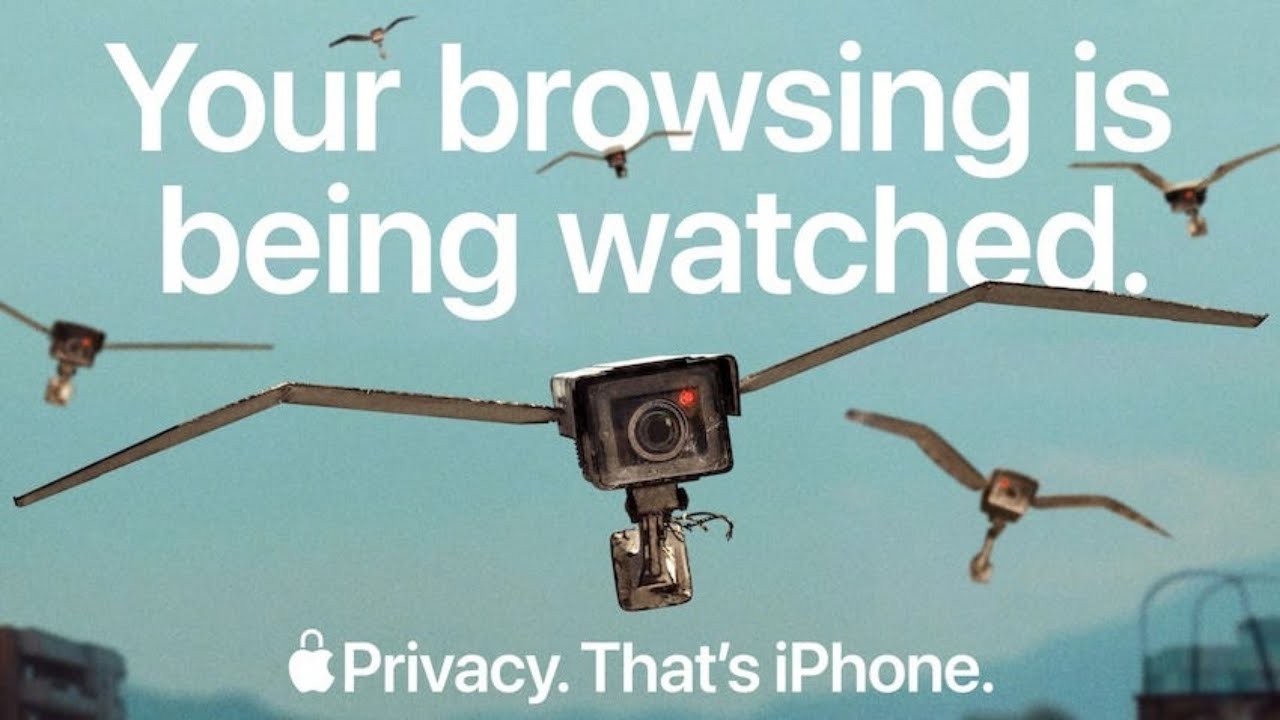
We’ve failed to embrace the idea that we could also have national radio outside of the ABC/SBS which would have been ideal for an XM style setup
3 Likes
Yes the commercial operators and ABC are refusing to pay for it, but what about if they played hardball. They could say if the existing commercial stations aren’t prepared to broadcast in DAB+ in these larger centres then they will offer the spectrum to new commercial players and/or community broadcasters. I would start with Sunshine Coast and basically offer the spectrum up to any new operator who is willing to broadcast in DAB+
I reckon you would see a very quick change of heart from the existing operators.
The biggest mistake they ever made with the DAB+ rollout was not allowing new players.
I really think that DAB+ should be rolled out to the largest 6 or 7 regional centres, particularly around the eastern seaboard capitals (e.g. Sunshine Coast, Central Coast, Illawara, Geelong). The government should push and fund ABC to do it, and if the commercial operators won’t pay then open those areas up to new commercial competition.
1 Like